
Combed Cotton Meaning: Super Combed vs Regular Cotton, Hindi and Tamil Meaning
Combed cotton means cotton whose fibres have been brushed with fine metal combs before spinning, so the short, weak fibres and leftover specks of dirt are pulled out. Only the longer, straighter fibres go into the yarn, which is why combed cotton feels smoother, pills less and is stronger than regular (carded) cotton. In Hindi it is कंघी किया हुआ कॉटन (kanghi kiya hua cotton); in Tamil, சீவப்பட்ட பருத்தி (seevappatta paruthi). It is still cotton, just cleaner and more refined.
We make children's clothes in our own unit in Tiruppur, the knitwear hub of Tamil Nadu, so "combed" and "super combed" are words we use every day when buying yarn. This guide explains what they actually mean, how they compare with carded, ring spun, compact and organic cotton, and how to check a label before you buy.
In this guide
- Combed cotton meaning in Hindi and Tamil
- How cotton is combed, step by step
- Combed cotton vs regular cotton
- What is super combed cotton?
- Combed vs carded vs ring spun vs compact vs organic
- Is combed cotton good for babies and kids?
- How to check a label
- How Gozi uses combed and super combed cotton
- FAQs
Shop this guide
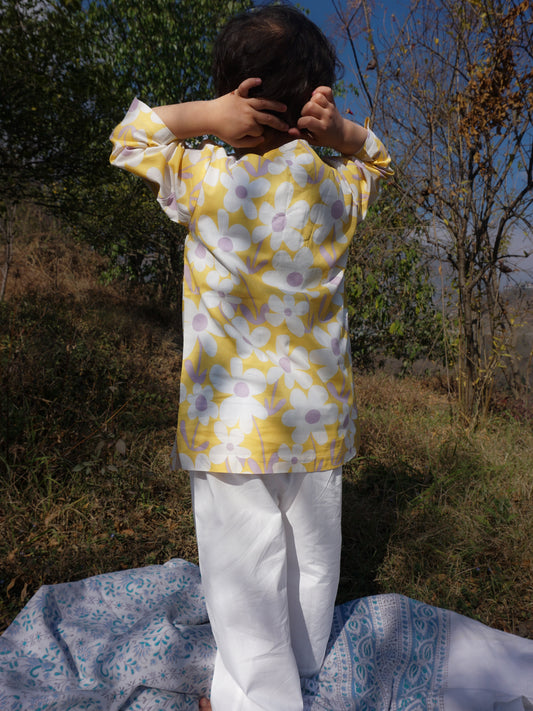
 Butter Yellow Cotton T-Shirt for Kids₹399
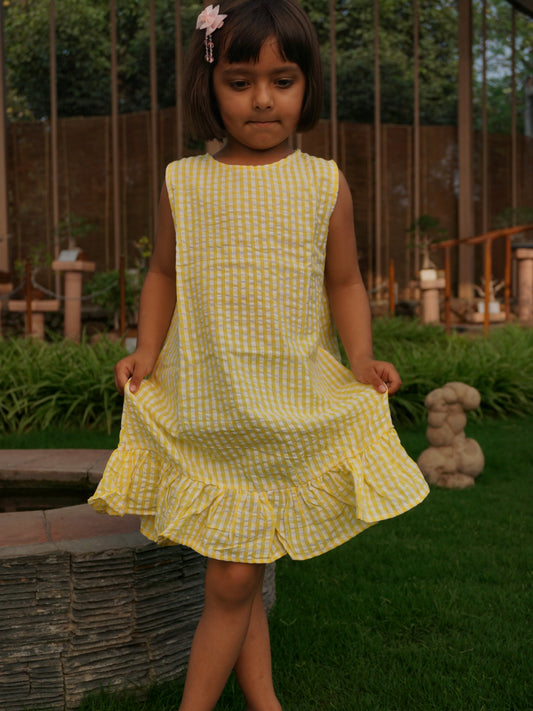
 Sparkling Sun Fun Cotton T-Shirt for Kids₹499
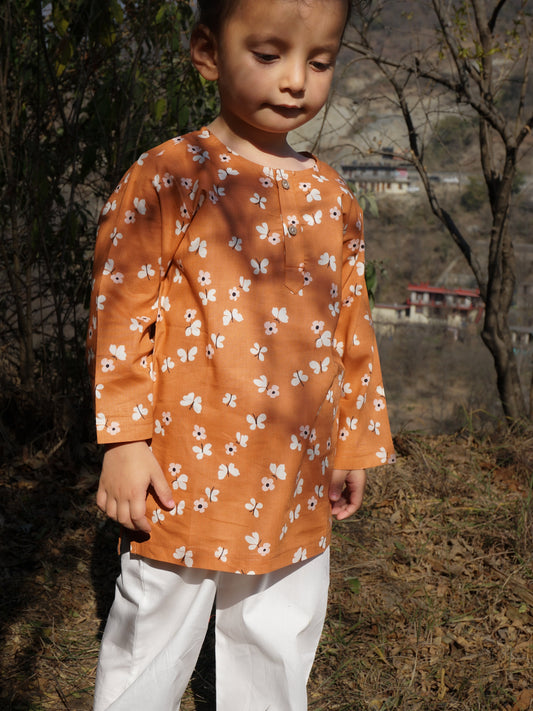
 Happy Tomato Cotton T-Shirt for Kids₹499
100% cotton · 7-day returns · Free shipping · COD on orders under ₹5,000
Combed cotton meaning in Hindi and Tamil
Hindi: कंघी किया हुआ कॉटन (kanghi kiya hua cotton). कंघी means comb, so the phrase literally means "cotton that has been combed".
Combed cotton kya hota hai? Yeh woh cotton hai jiske chhote aur kamzor reshe (fibres) spinning se pehle kanghi jaisi machine se nikaal diye jaate hain. Bache hue lambe reshon se jo dhaaga banta hai, woh zyada mulayam, majboot aur saaf hota hai. Isliye combed cotton ke kapde kam roye (pilling) chhodte hain aur zyada din naye dikhte hain.
Tamil: சீவப்பட்ட பருத்தி (seevappatta paruthi), meaning cotton that has been combed or groomed. Short fibres are removed so the yarn is smoother and stronger.
In practice, Indian mills, shops and clothing labels use the English words "combed cotton" in every language. So if you see "100% combed cotton" on a tag in Delhi, Chennai or Kolkata, it means the same thing everywhere.
How cotton is combed, step by step
Combing is one step in turning raw cotton into yarn. Here is the journey in a spinning mill:
- Opening and cleaning (blow room): bales of raw cotton are opened up and most of the seeds, leaf bits and dust are beaten out.
- Carding: wire-covered rollers separate the fibres and lay them roughly in one direction, forming a soft rope called a sliver. Yarn spun at this stage is called carded cotton.
- Combing: for combed yarn, the sliver goes through a comber, which uses rows of fine needles to pull out short fibres, tiny knots (neps) and remaining impurities. The removed waste is called noil. According to NPTEL's textile engineering course from the IITs, mills remove anywhere from about 8% to 25% of the fibre as noil, depending on the yarn quality they want.
- Drawing and roving: the combed slivers are blended, stretched and lightly twisted so they are even.
- Spinning: the fibres are twisted into yarn, usually on a ring frame (ring spun) or a compact ring frame.
- Knitting or weaving: the yarn becomes fabric. In Tiruppur most kidswear fabric is knitted (single jersey for T-shirts, French terry or fleece for sweatshirts), then washed, dyed and finished.
Because combing throws away usable fibre and needs extra machines, combed yarn costs more than carded yarn. That cost is the main reason cheaper clothes often use carded cotton.
Combed cotton vs regular cotton: what is the difference?
"Regular cotton" in shops usually means carded cotton, which has skipped the combing step. Both are real cotton. The difference is how clean and even the yarn is.
| Feature | Regular (carded) cotton | Combed cotton |
|---|---|---|
| Processing | Carded only | Carded, then combed to remove short fibres |
| Fibres in the yarn | Mix of long and short fibres | Mostly long, parallel fibres |
| Feel on skin | Can feel slightly rough or fuzzy | Smoother and softer |
| Pilling (small fuzz balls) | More likely, because short fibres work loose | Less likely |
| Strength | Good | Stronger for the same thickness, since weak short fibres are gone |
| Look | More hairy surface, prints can look less crisp | Cleaner surface, prints and colours look sharper |
| Price | Lower | Higher |
| Good for | Towels, denim, budget basics | T-shirts, innerwear, babywear, shirts, sweatshirts |
Carded cotton is not "bad". For thick towels or rugged fabrics it works well. For clothes that sit against a child's skin all day and get washed every other day, combed yarn is usually worth the extra cost.
What is super combed cotton?
Super combed cotton is combed cotton where the comber is set to remove a larger share of short fibre, so the remaining yarn is even cleaner, finer and more uniform. There is no official Indian or international standard that defines "super combed". It is a trade term mills and brands use for their higher grade of combed yarn, so the exact difference from regular combed varies by supplier.
What you can expect from a good super combed yarn: a smoother, slightly silkier hand feel, a more even surface with fewer thick and thin spots, and better resistance to pilling.
"100% super combed cotton" means the fabric is entirely cotton and the yarn has had this extra combing. "Super combed cotton rich fabric" is different: "cotton rich" means the fabric is mostly cotton but blended with something else, such as polyester or elastane (spandex). Always check the percentage on the label.
Combed vs carded vs ring spun vs compact vs organic cotton
These words get mixed up because they describe different stages. A single T-shirt can be "organic, combed, compact, ring spun cotton" all at once.
| Term | What it describes | What it means for you |
|---|---|---|
| Carded cotton | Fibre preparation (no combing) | Basic, affordable, a little fuzzier |
| Combed cotton | Fibre preparation (short fibres removed) | Softer, stronger, less pilling |
| Super combed cotton | A higher grade of combing | Even smoother and more uniform yarn |
| Ring spun cotton | Spinning method (fibres twisted on a ring frame) | Strong, soft yarn; can be carded or combed |
| Compact cotton | A refined ring spinning method that tucks in loose fibre ends | Less hairy, stronger yarn; research in the Journal of Engineered Fibers and Fabrics (2012) found compact yarns less hairy and stronger than conventional ring yarns |
| Organic cotton | How the cotton was farmed (certified, no synthetic pesticides or fertilisers) | About farming, not softness; organic cotton can be carded or combed |
| Biowashed cotton | A fabric finish using enzymes to remove surface fuzz | Softer feel and cleaner surface; read what biowashing is and why it matters |
Ring spun vs combed cotton: this is not either/or. Ring spinning is how the yarn is twisted; combing is how the fibres are cleaned before twisting. "Combed ring spun" is a very common and good combination for T-shirts.
What does "30s combed" mean? The number is the yarn count in the English cotton count system (Ne). Cotton Incorporated explains that the count is the number of 840-yard lengths in one pound of yarn, and the higher the number, the finer the yarn. So 30s yarn is finer than 20s and thicker than 40s. 30s combed is a popular choice for kids' T-shirts because it is fine enough to feel soft but sturdy enough for daily play. We go deeper in why 30s combed cotton works so well for kids' clothes.
Is combed cotton good for babies and kids?
Yes, combed cotton is one of the best everyday choices for babies and children, for practical reasons:
- Smoother next to the skin: fewer short, prickly fibre ends means less rubbing on delicate skin. If your child has eczema or very sensitive skin, see our guide to the best fabrics for sensitive and eczema-prone kids.
- Holds up to frequent washing: stronger yarn with fewer loose fibres pills less, so clothes look newer for longer.
- Breathable: it is still cotton, so it absorbs sweat and lets air through, which matters in Indian summers. Polyester does not do this as well, which is why we don't use polyester for kids' clothes.
To be fair, combing is not the only thing that decides comfort. How heavy the fabric is (GSM), how it is knitted, finishes like biowashing, and safe dyes matter just as much. A thin, well finished combed jersey will feel very different from a heavy combed fleece.
Is combed cotton stretchy? Combing does not add stretch. Stretch comes from the knit (single jersey and rib knits have natural give) or from added elastane. Woven combed cotton, like a shirt poplin, has very little stretch.
Does combed cotton shrink? It can, like all cotton. How much depends on whether the fabric was pre-shrunk or compacted during finishing and how you wash it. Washing in cold water and avoiding very hot drying helps. Our guide to washing and maintaining cotton clothes covers this.
How to check if clothes are really combed cotton
- Read the label carefully. Look for "100% combed cotton" or "100% super combed cotton". "Cotton rich" or "cotton blend" means it is mixed with another fibre.
- Look for the yarn count. Better brands often mention it (for example 30s combed). It shows the brand knows its fabric.
- Hold it up to the light. Combed fabric looks even, without many thick and thin patches.
- Rub the inside. Rub a small area of the fabric against itself a few times. Carded fabric tends to fuzz up faster.
- Watch it after a few washes. Combed cotton should stay smooth with little pilling under the arms and on the sides.
How Gozi uses combed and super combed cotton
Here is exactly what goes into our clothes, as stated on each product page:
- T-shirts: our Red Label cotton T-shirts are made from 100% combed, biowashed Red Label cotton, with no polyester. Browse all cotton T-shirts for kids, or start with the Butter Yellow Tee or The Essential Classic White Tee.
- Sweatshirt and jogger sets: made from Red Label 30s super combed yarn, biowashed for extra softness, 100% cotton. See the Sunrise Sorbet sweatshirt and jogger set and the full sweatshirt sets collection.
- Made in-house: our clothes are manufactured in-house by Gozi Lifestyle Pvt. Ltd. in Tiruppur, and Gozi holds OEKO-TEX Standard 100 certification, as listed on our product pages.


Want an easy way to try it? The pack of 3 Red Label cotton T-shirts lets you feel the difference across three colours.
How to care for combed cotton clothes
- Machine wash cold with similar colours on a gentle cycle, or hand wash.
- Turn printed T-shirts inside out to protect the print.
- Do not use bleach.
- Line dry in the shade or tumble dry on low; strong sun fades colours over time.
- Iron on low heat, inside out, if needed.
For tough stains like turmeric, see how to remove haldi stains from kids' clothes.
Frequently asked questions
What does 100% combed cotton mean?
It means the fabric is made entirely of cotton, and the cotton fibres were combed before spinning to remove short fibres and impurities. There is no polyester or other fibre mixed in.
Is combed cotton 100% cotton?
Combing is a processing step, not a fibre, so combed cotton itself is pure cotton. A garment can still be a blend, though, so check that the label says "100% combed cotton" rather than "cotton rich" or "cotton blend".
Which is better, combed cotton or regular cotton?
For clothes worn next to the skin, combed cotton is usually better: softer, stronger and less likely to pill. Regular carded cotton is cheaper and fine for towels, denim and heavy fabrics.
Is super combed cotton pure cotton?
Yes, if the label says 100% super combed cotton. "Super combed" only describes a higher level of combing. If the label says "super combed cotton rich", it is a blend with another fibre.
What is the difference between combed cotton and organic cotton?
Organic describes how the cotton was grown; combed describes how the fibre was cleaned before spinning. They are independent, so a fabric can be organic and combed, organic and carded, or conventional and combed.
Is combed cotton good for summer?
Yes. It is breathable and absorbs sweat like any cotton. For hot Indian summers, pick a lighter fabric (lower GSM) in a loose fit. Our GSM guide explains which weights suit which season.
What is combed cotton fabric used for?
T-shirts, babywear, innerwear, polo shirts, sleepwear, sweatshirts and good quality bed sheets, anywhere softness and durability matter.
Related reading
- What is GSM in fabric? Full form, formula and the right GSM for kids' clothes
- Why 30s combed cotton is the best fabric for kids' pants
- What is French terry fabric? A manufacturer's guide
- Biowashing: what it is and why it matters
Sources: NPTEL, Introduction to Combing; Cotton Incorporated, English cotton count; Altas and Kadoglu, Comparison of Conventional Ring, Mechanical Compact and Pneumatic Compact Yarn Spinning Systems, Journal of Engineered Fibers and Fabrics, 2012. Gozi product details are taken from our own product pages.
Tags:
Previous
Dermatologist-Approved: The Ultimate Fabric Guide for Babies with Sensitive Skin.
Next
Why Cotton Kidswear Makes the Perfect Return Gift (and How Bulk Orders Work)