
Winter Trip Packing List for Kids: What to Pack for Manali, Shimla and Snow Days (1 to 8 Years)
For a winter trip to Manali, Shimla or any Indian hill station, pack each child 2 thermal sets, 3 to 5 cotton T-shirts, 2 to 3 sweatshirt and jogger sets, 1 to 2 extra warm pants, 1 hooded warm jacket, 2 full-sleeve night suits, 2 pairs of mittens or gloves, an ear-covering cap and 5 to 10 pairs of socks. Layers matter more than heavy clothes: a thermal underneath, cotton winter wear for kids in the middle, and a jacket on top. For snow play, rent a waterproof snowsuit and boots instead of buying them.
We make kids clothes in our own unit in Tiruppur, so this guide comes from a maker's view of fabric, fit and layering. Below you will find exact quantities by trip length, what changes for a 1 year old versus a 7 year old, how to dress kids for the journey, what to rent at the snow point, and a day-bag checklist you can screenshot before you leave.
Shop this guide
In this guide
- How cold does it get in Manali and Shimla in winter?
- How many layers does a child need in the hills?
- Winter trip packing list for kids by number of days
- Is cotton good for a snow trip? A maker's honest answer
- What changes for babies, toddlers and older kids?
- What should kids wear on the journey?
- What to wear and rent for a snow day
- What should kids sleep in at a hill station hotel?
- The day-bag checklist
- Packing mistakes we see parents make
- FAQ
How cold does it get in Manali and Shimla in winter?
Cold enough that a Bengaluru or Mumbai child's "winter" wardrobe will not do, but not so cold that you need Himalayan expedition gear for a town holiday. The official numbers are a good place to start:
- Shimla: the India Meteorological Department's climatology note for Shimla puts the average winter temperature between minus 1°C and 10°C, with January the coldest month. Its 1991 to 2020 November normals show daytime highs falling from about 19°C at the start of November to about 16°C by the end, and night lows from about 10°C to about 6.5°C.
- Manali: Himachal Pradesh Tourism's official Manali page says temperatures in December and January can fall below minus 5°C, that "woolens are essential", and that sudden snowfall can turn a warm day cold within minutes.
Two things follow from this for packing. First, the swing between a sunny noon and a dark evening is large, so you need layers you can add and remove, not one thick outfit. Second, the weather can change fast, so the warm layer has to travel with you in the day bag, not stay in the hotel room.
| Trip type | What to expect | What your child needs |
|---|---|---|
| Shimla, Mussoorie or similar town stay in November | Mild sunny days, cold mornings and nights (IMD November normals for Shimla: lows of about 6.5°C to 10°C) | Cotton T-shirt plus sweatshirt set by day; jacket for evenings; thermals optional, mainly for night |
| Shimla in December to February | Winter average minus 1°C to 10°C, January coldest (IMD) | Thermal base every day, sweatshirt set, warm jacket, cap and mittens |
| Manali in December and January | Can fall below minus 5°C; sudden snowfall (Himachal Tourism) | Full layering every day: thermal, sweatshirt set, padded jacket, cap, mittens, warm socks |
| Snow point day trip (Solang Valley, Kufri and similar) | Wet snow, wind, strong sun on snow | Thermal base, warm mid layer, rented waterproof snowsuit and boots, spare dry set in the car |
| Long road or train journey up the hills | Warm vehicle, cold stops, motion sickness | Sweatshirt set with a T-shirt under it, jacket within reach, a spare outfit |

How many layers does a child need in the hills?
Think in three layers plus extremities. The American Academy of Pediatrics says several thin layers will help keep kids warm and dry, and that because children's bodies are smaller, they lose heat more quickly than adults. Here is how that translates into a suitcase:
- Base layer (against the skin): a thermal top and bottom on cold days, or a full-sleeve cotton T-shirt on milder ones. Its job is to feel soft and manage moisture.
- Mid layer (the warmth): a cotton sweatshirt and jogger set or French terry pants. This is what your child lives in all day, in the car, at the cafe and in the hotel.
- Outer layer (wind and weather): a hooded padded jacket for town, and a waterproof snowsuit for snow play.
- Extremities: a cap that covers the ears, mittens or gloves, warm socks and closed shoes. The AAP calls insulated boots, mittens or gloves and a hat "essential".
Indoors, take the outer layer off. Hotel rooms with heaters, restaurants and cars can be warm, and a child who sweats in a jacket indoors and then walks out into cold air feels colder than if they had been dressed lighter. If your child's neck or back is sweaty, remove a layer. If their hands are cold but their back is warm, the fix is mittens, not another sweater.
Our winter layering guide with a temperature chart goes deeper into how many layers to use at each temperature at home. This post is about what to carry when you leave home.
Winter trip packing list for kids by number of days
This is the core list, per child. It assumes you will not be able to dry much laundry in the hills (cold, damp air and short sunny hours make cotton slow to dry in a hotel room), so it is built around rewearing mid layers and changing base layers and socks often.
| Item (per child) | 3 to 4 nights | 5 to 7 nights | 8 to 10 nights | Why this number |
|---|---|---|---|---|
| Thermal sets (top and bottom) | 2 | 2 to 3 | 3 | One on, one airing; a third for longer trips or a snow day |
| Cotton T-shirts, full sleeve if possible | 3 | 4 | 5 | Base layer on milder days, under-layer on travel days, a fresh layer after spills |
| Sweatshirt and jogger sets | 2 | 3 | 3 | The mid layer is worn over a base layer, so it can be reworn for 2 days |
| Extra warm pants (French terry or joggers) | 1 | 2 | 2 | Pants get wet and muddy first; swap them without changing the whole outfit |
| Hooded padded jacket | 1 | 1 | 1 | Worn every time you step out; pick one with a hood and full zip |
| Waterproof snowsuit or rain-proof outer | Rent | Rent | Rent or 1 | Kids outgrow them fast; snow points rent them by the day |
| Full-sleeve night suits | 2 | 2 | 3 | Night clothes stay clean longer; one spare for accidents |
| Innerwear | 5 | 8 | 11 | Number of days plus 1 or 2 |
| Socks | 5 pairs | 8 pairs | 10 pairs | Two pairs a day on snow or rainy days; wet socks chill fastest |
| Cap covering the ears | 1 | 2 | 2 | One always goes missing |
| Mittens or gloves | 2 pairs | 2 pairs | 3 pairs | One pair will get wet in snow; never put wet gloves back on |
| Neck warmer or soft scarf | 1 | 1 | 2 | A neck warmer is safer than a long scarf for small children |
| Shoes | Warm closed shoes plus 1 spare pair | Same | Same | If one pair gets soaked, the other has a day to dry |
| Sunglasses and sunscreen | Yes | Yes | Yes | Sun is stronger at altitude and off snow (see below) |
How to read this list: the numbers are a starting point for a child who is out sightseeing every day. If you are mostly staying in one cottage or homestay with heating and a washing machine, drop one T-shirt and one sweatshirt set. If your child is under 3, add one complete spare outfit on top of these numbers, because nappy leaks, food and muddy puddles happen.
A quick sizing tip for layering: clothes you buy for the trip must fit over a thermal. If you are buying a regular-fit sweatshirt set, check its chest measurement against your child's chest plus the thermal underneath. Intentionally oversized sets already leave that room. Our size chart for kids by age and height shows how to measure chest and length at home in two minutes.

Mid layer with room for thermals
Jungle Friends Oversized Sweatshirt SetOversized cotton set with room for a thermal underneath
₹1,699View sizes →
The Jungle Friends set is cut intentionally oversized, and its product notes say the relaxed fit leaves space for a T-shirt or warm inner layer underneath. That is exactly what you want for a trip: thermal underneath on the cold days, worn on its own on milder ones. It is 100% biowashed cotton with no fleece inside, so it does not overheat your child in a warm car. The Little Wrecking Crew oversized set is the same fabric and fit in a construction print, for kids who would rather wear diggers than animals.
Is cotton good for a snow trip? A maker's honest answer
Cotton is excellent for most of a hill holiday and the wrong choice for one specific situation. As a cotton-only brand, we would rather tell you exactly where that line is.
Where cotton works well: on the journey, in town, in cafes, in the hotel and at night. Cotton breathes, so a child who runs around and then sits in a heated room does not end up clammy. It is soft against skin that is already dry and chapped from cold air. A mid-weight cotton knit, such as our 240 GSM French terry, traps warm air in its inner loops while still letting sweat escape. If GSM is new to you, our explainer on what French terry fabric is and how it compares with fleece covers it.
Where cotton does not work: in wet snow, against the skin. Cotton fibres absorb water and dry slowly, so cotton that is soaked through with melted snow or sweat stays wet and cold. The AAP's advice is direct: make sure children change out of any wet clothes right away, and wet clothing draws heat away from the body. The US Centers for Disease Control and Prevention notes that hypothermia can occur even at cool temperatures above 40°F (about 4°C) if a person is wet from rain, sweat or cold water and becomes chilled.
So for snow play, the system is: a thermal as the base layer, cotton sweatshirt set as the mid layer if it will stay dry, and a waterproof snowsuit over everything so the snow never reaches the cotton. When the snowsuit comes off, check the layers underneath. Anything damp comes off, and a dry set goes on before the drive back.

What changes for babies, toddlers and older kids?
The list above works for every age from 1 to 8, but how you use it changes as children grow. This is the part most packing lists skip.
| Age | What is different | What to change in the bag |
|---|---|---|
| 1 to 2 years | Carried in a carrier or pushchair, so they move less and generate less heat than you. Cannot tell you they are cold. | Dress them in one more layer than you are wearing (an AAP rule of thumb for infants). Thumbless mittens stay on better than gloves. Two-piece sets mean a nappy change does not need a full undress in a cold room. Add 1 extra full outfit. |
| 3 to 5 years | Run hot, then crash cold when they stop. Potty training or newly trained, often in cold bathrooms. | Full-zip layers they can help remove. Elastic-waist joggers they can pull down fast. Spare pants and socks in the day bag at all times. Gloves with a wrist strap or clip. |
| 6 to 8 years | Play in snow longer and harder, walk more on treks, care about how they look in photos. | Two pairs of gloves on snow days. Let them carry their own small backpack with spare socks and gloves. Pack one outfit they actually like for photos. |
For any age, check warmth on the back of the neck or the tummy, not the hands. Little hands are often cold even when the child is comfortable. A sweaty neck means too many layers; a cool tummy means add one.

Easy two-piece set for travel days
Sunrise Sorbet Sweatshirt and Jogger Set30s super combed cotton, biowashed
₹1,199View sizes →
What should kids wear on the journey?
Most families reach the hills by an overnight bus from Delhi, a train to Kalka or Chandigarh followed by a drive or the toy train, or a flight to the nearest airport followed by a long road trip. All three have the same pattern: warm inside the vehicle, cold at every stop.
- Dress for the vehicle, carry for the stop. A cotton T-shirt under a sweatshirt and jogger set is the ideal travel outfit. Keep the jacket, cap and socks in a bag at your feet, not in the boot.
- Car seats and bulky jackets do not mix. The AAP says bulky clothing, including winter coats and snowsuits, should not be worn underneath the harness of a car seat. Buckle your child in wearing thin layers, then put the jacket or a blanket over the harness. The same AAP page suggests close-fitting layers underneath and a top layer you can remove once the car warms up.
- Hill roads and motion sickness. Pack a full spare outfit within reach, plus a couple of plastic bags. Soft cotton sets are easier to change in a cramped back seat than jeans.
- Overnight buses. Air conditioning or heating can vary a lot between buses. Put your child to sleep in their sweatshirt set with socks on, and keep a light blanket out.
What to wear and rent for a snow day
A snow day is the one day you dress your child completely differently. At popular snow points, you will usually find shops renting snowsuits and snow boots for the day, which is the sensible choice for kids who will outgrow them by next winter. Check that the rented suit is dry inside and the boots are a snug fit with thick socks on.
The snow-day outfit, from the skin out:
- Thermal top and bottom.
- Cotton sweatshirt and joggers, or a warm fleece if you have one.
- Rented waterproof snowsuit, zipped to the chin.
- Ear-covering cap, mittens, neck warmer.
- Thick socks inside the snow boots.
Leave in the car: a complete dry set (thermal, T-shirt, joggers, socks), a towel, a second pair of gloves and a flask of something warm.
Do not forget the sun. The World Health Organization notes that UV radiation levels increase with altitude, that fresh snow increases UV levels by reflection, and that children are particularly vulnerable to UV damage. Sunscreen on the face and sunglasses are part of the snow-day kit, even when it feels cold.
Know when to stop. The NHS notes that you can get frostbite if your skin is exposed to temperatures of 0°C or below, and recommends several loose layers with a waterproof outer layer, gloves or mittens, and thick socks and boots. Take regular breaks in the car or a cafe, and bring a child in if they are shivering, their fingers, ears or cheeks look pale or feel numb, or they go unusually quiet. Remove any wet clothing first, then warm them up. If skin stays pale, hard or numb after warming, see a doctor.
One more practical note for Manali: Himachal Tourism says heavy snow closes Rohtang Pass in late November, and it usually reopens around May, so plan your snow day at the lower snow points in peak winter.


Warm everyday pants
French Terry Caramel Striped PantsLooped French terry with a cargo pocket
₹799View sizes →
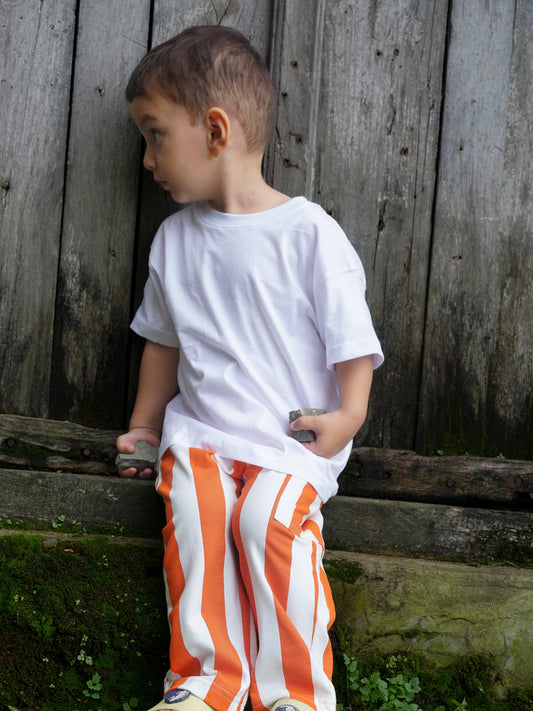
French terry pants are the most useful "extra" in the bag. They are a knitted cotton fabric, smooth outside with soft loops inside, which feel cushioned and warm without the bulk of fleece. The black and white and yellow striped pairs are 240 GSM with an undyed inner face, and they are compacted and pre-shrunk in our factory to under 5% shrinkage, so the fit holds up through the wash you do when you get home.
What should kids sleep in at a hill station hotel?
A full-sleeve cotton night suit with socks is right for most heated hotel rooms and homestays. Hotels in the hills vary a lot: some rooms have room heaters that make them warm and dry, others are cold stone cottages. Pack for the second and adjust for the first.
- Heated room: full-sleeve cotton night suit and socks, normal quilt. Children kick quilts off, so check on them once, but resist adding a sweatshirt on top in a warm room.
- Unheated room: thermal under the night suit, socks, and an extra blanket from reception.
- Not to sleep in: the jacket, a cap with strings, or the clothes they wore out in the snow, even if they seem dry.
Our guides on whether cotton night suits keep kids warm in winter and on safe fabric for children's sleepwear go into the detail.
The day-bag checklist
Most winter trip trouble happens away from the hotel: a snowball down a sleeve, a spilled hot chocolate, a toilet stop that goes wrong. This is what lives in the day bag, every day.
| Item | Quantity | Tick |
|---|---|---|
| Spare socks | 2 pairs per child | ☐ |
| Spare gloves or mittens | 1 pair per child | ☐ |
| Spare pants (joggers or French terry) | 1 per child (2 for under 3s) | ☐ |
| Spare innerwear | 1 to 2 per child | ☐ |
| Cap and neck warmer | On the child or in the bag | ☐ |
| Warm jacket | Even if it is sunny when you leave | ☐ |
| Sunscreen and child sunglasses | 1 each | ☐ |
| Lip balm and moisturiser | 1 each | ☐ |
| Wet wipes and a few plastic bags | For wet clothes and motion sickness | ☐ |
| Small towel | 1 | ☐ |
| Flask of warm water | 1 | ☐ |
| Snacks | Enough for one delay | ☐ |

Packing mistakes we see parents make
- One very heavy jacket and nothing else. It is too hot in the car and in cafes, so it comes off, and then the child has nothing warm in between. Three thinner layers beat one thick one.
- Scratchy wool straight on the skin. Woollen sweaters can itch on children's skin. Put a soft cotton T-shirt or thermal underneath.
- Only one pair of gloves. The first snowball fight soaks them. Always carry a second pair.
- Buying the regular size without checking room for a thermal. A sweatshirt that fits perfectly at home will feel tight over a thermal. Check the chest measurement, or choose an oversized set.
- Brand-new shoes on day one. New boots plus long walks equal blisters. Wear them at home for a week first.
- Packing for the weather forecast, not the altitude. Mountain weather changes fast, as Himachal Tourism itself warns. Pack for a colder day than the forecast says.
- Too many "photo" outfits. Pick one outfit your child likes for pictures and make the rest practical. Most photos will be of the jacket anyway.

Travel-day favourite
Whispering Pines Sweatshirt and Jogger SetRelaxed sweatshirt, tapered joggers, sizes 1 to 8
₹1,199View sizes →
Frequently asked questions
How many clothes should I pack for a 5-day Manali trip with a toddler?
For 5 nights, pack 2 to 3 thermal sets, 4 cotton T-shirts, 3 sweatshirt and jogger sets, 2 extra warm pants, 1 hooded jacket, 2 night suits, 8 pairs of socks, 2 pairs of mittens, 2 caps and 8 sets of innerwear. Add one complete spare outfit because a toddler will need it. Rent the snowsuit and boots for the snow day.
Is cotton warm enough for Shimla or Manali in winter?
Cotton is warm enough as the mid layer for town sightseeing when it is worn over a thermal and under a jacket. Mid-weight cotton knits like French terry trap warm air well. Cotton should not be the layer that gets wet in snow, because it dries slowly, so cover it with a waterproof snowsuit on snow days and change anything damp straight away.
Do kids need thermals for Shimla in November?
Usually not during the day. IMD's 1991 to 2020 normals for Shimla in November show daytime highs of about 16°C to 19°C and night lows of about 6.5°C to 10°C, so a cotton T-shirt under a sweatshirt set and a jacket for evenings is enough for most children. Pack one thermal set for early mornings, nights or an unexpectedly cold day.
Should I buy snow boots and a snowsuit for my child?
For a single trip, renting at the snow point is the better choice. Children outgrow snow gear within a year, and you will rarely use it in the plains. Buy only the things that touch the skin or get lost: thermals, gloves, caps and socks.
What should a baby wear on the drive or overnight bus to the hills?
Thin, close-fitting layers such as a cotton bodysuit or T-shirt under a sweatshirt set, plus socks and a cap. If the baby is in a car seat, do not put a bulky jacket or snowsuit under the harness; buckle them in and lay the jacket or a blanket over the straps. Infants generally need one more layer than the adults around them.
Can we take kids to Rohtang Pass in winter?
Not in peak winter. Himachal Pradesh Tourism says heavy snow closes Rohtang Pass in late November and it usually reopens around May, so winter snow days with children are usually planned at lower snow points closer to Manali.
What size should I buy winter sets in for a trip?
Buy your child's normal size only if the garment is cut oversized or has room for a thermal underneath. For regular-fit sets, measure your child's chest over a thermal and compare it with the product's size chart. A set that is snug at home will feel tight once it is layered.
Want more on choosing the mid layer itself? Read our guide on how to choose sweatshirts for kids: fleece vs French terry, fit and size, or browse all cotton sweatshirt sets for kids.
Packing for the hills this winter?
Sweatshirt sets, French terry pants and layers that fit over a thermal, for ages 1 to 8, made in our own unit in Tiruppur.
Shop cotton winter wear for kids →100% cotton · 7-day returns · Free shipping · COD on orders under ₹5,000
Tags: