
Baby Winter Clothes: How to Layer Babies and Toddlers for Indian Winters (Temperature Chart)
The best baby winter clothes for most of India are thin cotton layers, not one thick outfit. Put a soft cotton T-shirt next to the skin, a cotton sweatshirt and jogger set over it, and add a jacket, woollen cap and socks only when you step out on a cold morning or evening. Take a layer off indoors, and check warmth at the back of the neck, not the hands. Our winter clothes for kids: cotton sweatshirt and jogger sets are built around exactly this layering system.
Gozi makes kids' clothes for ages 1 to 8 in its own unit in Tiruppur. This guide is written from the maker's side of the table: which fabric does what, how much warmth a cotton layer really gives, and how to build a winter wardrobe that suits a Delhi January as well as a Bengaluru December, without overheating your child.
In this guide
- How many layers does a baby need in winter?
- What should a baby wear at 25°C, 15°C or 5°C? (temperature chart)
- How cold does winter get where you live?
- Which fabric is warmest for baby winter clothes?
- What to check before you buy a winter sweatshirt set
- 6 Gozi sweatshirt sets for Indian winters
- How many winter clothes does a toddler need?
- What size to buy for winter
- How to dress a baby for sleep in winter
- Car seats, scooter rides and winter outings
- Winter clothes for kids aged 4 to 8
- FAQ
How many layers does a baby need in winter?
The simplest rule comes from the American Academy of Pediatrics: for older babies and young children, dress them in one more layer of clothing than an adult would wear in the same conditions, and use several thin layers rather than one heavy one. If you are comfortable in a kurta and a light shawl, your toddler needs a T-shirt, a sweatshirt and probably socks.
Think of it as three jobs:
- Base layer (next to the skin): a soft cotton T-shirt or vest. It absorbs sweat and stops anything scratchy touching the skin.
- Middle layer (the warmth): a cotton sweatshirt and joggers, or a sweater. This traps a layer of warm air around the body.
- Outer layer (only outdoors when it is cold or windy): a jacket, a woollen sweater or a padded coat, plus cap, socks and mittens if needed.
Most Indian winter days only need the first two. The outer layer is for early mornings, late evenings, hill stations and the coldest weeks in the north. Because each layer comes off on its own, your child stays comfortable when you walk from a cold street into a warm house, which is exactly where one thick outfit fails.
What should a baby wear at 25°C, 15°C or 5°C?
Most guides say "dress in layers" and stop there. Here is what that means in actual temperatures. Check the weather app for the temperature you will be out in, then read across. These are starting points for a healthy toddler aged 1 to 3; always adjust to how your child feels.
| Temperature | Indoors (daytime) | Outdoors | Typical where and when |
|---|---|---|---|
| Above 24°C | Cotton T-shirt and pants or shorts. No winter wear. | Same, plus a light full-sleeve layer in the evening. | Chennai, Kochi, Mumbai through most of winter |
| 18 to 24°C | Full-sleeve cotton T-shirt and pants, or a sweatshirt set on its own. | Cotton sweatshirt set on its own. | Bengaluru, Pune, Hyderabad days; north India in early November |
| 12 to 18°C | Cotton T-shirt under a sweatshirt set. Socks. | T-shirt, sweatshirt set, light jacket. Cap if windy. | Deccan mornings; north and east India in December evenings |
| 6 to 12°C | Cotton T-shirt, sweatshirt set, socks. Add a sweater if the house is unheated. | T-shirt, sweatshirt set, woollen sweater or warm jacket, woollen cap, socks, closed shoes. | Delhi, Lucknow, Jaipur, Patna in late December and January |
| Below 6°C | Thermal or cotton base layer, sweatshirt set, sweater. | Thermal base, sweatshirt set, padded or woollen outer coat, cap covering ears, mittens, woollen socks. Keep trips short. | Hill stations, Kashmir, Himachal, Uttarakhand; cold waves on the plains |
Two things this chart deliberately leaves out. First, newborns and babies under 12 months need closer watching and your paediatrician's advice, especially for premature babies. Second, a heater or a closed room changes everything: if the room feels warm to you, take a layer off your child.
How cold does winter get where you live?
"Baby winter clothes" means very different things in Chandigarh and Chennai. Before you buy, match the wardrobe to your region rather than to what a shop window shows.
- North Indian plains (Delhi NCR, Punjab, Haryana, UP, Rajasthan, Bihar): the coldest weeks are late December and January, when nights often drop into single digits and fog keeps days cold. You need the full three-layer system, including a proper woollen or padded outer layer for mornings.
- Hills (Himachal, Uttarakhand, Kashmir, Sikkim, Darjeeling): treat it as real cold. Thermals, wool and a padded jacket are essentials; cotton sweatshirts are the comfortable middle layer and indoor wear.
- East and central India (Kolkata, Bhopal, Nagpur, Ranchi): cool to cold evenings from December to early February. A sweatshirt set over a T-shirt covers most days, plus one jacket.
- Deccan plateau (Bengaluru, Pune, Hyderabad): pleasant days, chilly early mornings. Sweatshirt sets on their own are usually enough; keep one light jacket for school-run mornings.
- Coastal south and west (Chennai, Kochi, Mumbai, Goa): winter is mild. A couple of full-sleeve layers for AC rooms, evening outings and travel north is all most families need.
If you live in a mild city but are travelling to north India or a hill station for a wedding or holiday, buy for the destination, not for home.

Which fabric is warmest for baby winter clothes?
Warmth in a fabric comes mostly from the still air it traps, so thickness, weight and surface texture matter as much as fibre. Fabric weight is measured in GSM (grams per square metre); a heavier knit generally traps more air and feels warmer. We explain the numbers in detail in what is GSM in fabric.
| Fabric | How it is made | Warmth | Breathability | Best job in a baby's winter wardrobe |
|---|---|---|---|---|
| Cotton jersey (T-shirt fabric) | Light single knit | Low | High | Base layer next to the skin |
| Cotton French terry | Smooth outside, soft loops inside, unbrushed | Medium | High | Middle layer and indoor winter wear; active toddlers |
| Brushed fleece (cotton or blend) | Inside loops brushed into a fluffy pile | Medium to high | Medium | Colder days in north India; less active outings |
| Wool and woollen knits | Animal fibre, often hand or machine knitted | High | Medium | Outer layer, caps and socks; can itch on bare skin, so wear over cotton |
| Padded or quilted jacket | Filling between two fabrics | Highest | Low | Short outdoor trips in real cold; never under a car seat harness |
So where does cotton fit? Honestly: cotton on its own is not a substitute for wool or a padded jacket at 5°C. What it does better than anything else is the layer your child lives in all day. It is soft, it breathes, so a toddler who runs around indoors does not end up sweaty under a synthetic layer, and it washes easily. That is why we use 100% cotton and no polyester in our sweatshirt sets, and why we design them to be layered. If you want the fibre-by-fibre argument, read why we don't use polyester for kids' clothing, and for how the loop-back knit works, our manufacturer's guide to French terry.
What should you check before buying a winter sweatshirt set for a baby or toddler?
When we make a sweatshirt set, these are the details we argue about on the cutting table. They are also the ones worth checking on any label before you pay.
- Fibre content on the label. "Cotton rich" or "cotton feel" usually means a polyester blend. Look for 100% cotton if you want natural fibre next to the skin.
- Inside finish. Turn it inside out. Soft loops (French terry) breathe well for active kids; a fluffy brushed fleece is warmer but heavier. Neither is better; pick by your city.
- Ribbed cuffs and hems. Rib-knit cuffs at the wrists and ankles stop cold air creeping up sleeves and legs, and keep sleeves out of food.
- Waistband. A soft elastic waist with no rough edges is comfortable for a full day and easy for toilet-training toddlers to pull down themselves.
- Room to layer. A slim sweatshirt will not go over a T-shirt comfortably. A relaxed or oversized cut does, and lasts longer as your child grows.
- Neck opening. A toddler's head is large for the body. A stretchy rib neck that goes over the head without a struggle saves you a fight every morning.
- Nothing loose around the neck. For babies and toddlers, avoid long hood cords and drawstrings at the neck.
- Who did the printing and dyeing. Prints sit on the skin all day. Certified processing units are a sign the maker has thought about chemical inputs.
6 Gozi sweatshirt sets that work for Indian winters
All six are 100% cotton sweatshirt and jogger sets from our current range, available across most sizes at the time of writing. We have been honest about which winter each one suits.
1. Jungle Friends Oversized Sweatshirt Set: the easy layering set
The Jungle Friends set is made from 100% biowashed cotton with no fleece lining, and it is intentionally oversized so a T-shirt or warm inner fits underneath. The printing and dyeing are done at GOTS-certified units. Pros: soft and smooth on the skin, works on its own in a mild winter and as a middle layer in a cold one. Cons: it is not a heavy winter garment, so in north Indian January mornings it needs a jacket on top. It runs large, so check the size chart.

Best for layering
Jungle Friends Oversized Sweatshirt Set
100% biowashed cotton, no fleece lining, oversized for layering. Sizes 1-2 Y to 7-8 Y.
₹1,699 ₹2,199
See the set →
2. Tomato Trouble Oversized Sweatshirt Set: a bright set for grey days
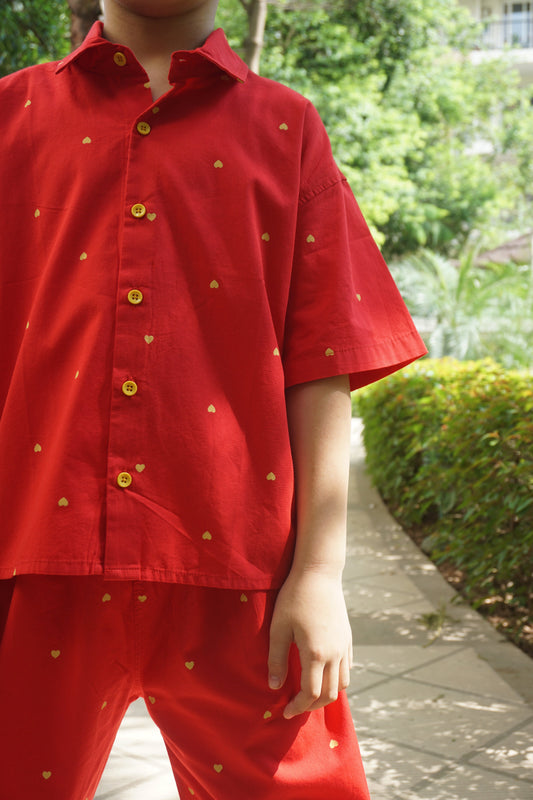
The Tomato Trouble set has the same biowashed cotton, oversized cut and no-fleece inside, with a cheerful red print. Pros: a complete matching outfit with no hunting for a bottom, and the relaxed fit leaves room to move and play. Cons: like all unlined cotton, it is a mild-winter or middle layer, not a standalone coat.

Colourful everyday winter set
Tomato Trouble Oversized Sweatshirt Set
Matching sweatshirt and jogger in 100% biowashed cotton. Sizes 1-2 Y to 7-8 Y.
₹1,699 ₹2,199
See the set →
3. Happy Tails Oversized Sweatshirt Set: for little animal lovers
The Happy Tails set is another biowashed cotton, oversized, unlined set from the same collection. Pros: a print toddlers enjoy pointing at, which helps on reluctant-to-dress mornings; good for travel, family visits and playdates. Cons: a lighter base colour shows mud from the park sooner.

For travel and playdates
Happy Tails Oversized Sweatshirt Set
Biowashed cotton, no fleece, made for easy layering. Sizes 1-2 Y to 7-8 Y.
₹1,699 ₹2,199
See the set →
4. Apple of My Eye Oversized Sweatshirt Set: a gentle print for baby girls and boys
The Apple of My Eye set shares the oversized, biowashed cotton construction. It is a popular pick for baby girl winter clothes, though like everything in the range the cut is unisex. Pros: soft, roomy and easy to layer. Cons: the oversized fit can look big on a petite 1 year old; the size chart helps here.
5. Fruits Sweatshirt and Jogger Set, 240 GSM French terry: the warmer weight
If your child feels the cold or you live in the north, the Fruits set is cut from 240 GSM 100% cotton French terry: plush loops inside, smooth outside. It has ribbed cuffs on the top and bottom that keep the warmth in, and a soft elastic jogger waist that toilet-training toddlers can manage. Both pieces are cut and stitched together in our Tiruppur unit so the colours match. Pros: warm without weight, still breathable for running around. Cons: a relaxed rather than oversized fit, so leave room if you plan a thick layer underneath.
6. Wheels and Dreams 2 Piece Sweatshirt Set: the value pick
The Wheels and Dreams set is made from export-quality cotton with a print of fire trucks, traffic cones and cars, in a relaxed fit that is sized bigger than usual so it lasts longer. Pros: the most affordable set here, and comfortable enough for school, play and even bedtime. Cons: sizes go up to 5-6 Y only.

Value pick
Wheels and Dreams 2 Piece Sweatshirt Set
Export-quality cotton, relaxed fit, fun vehicle print. Sizes 1-2 Y to 5-6 Y.
₹999 ₹1,299
See the set →
How many winter clothes does a baby or toddler need?
Buying too much winter wear is the most common mistake we hear about: children outgrow it in one season. Plan around how often you wash and how cold your city gets.
| Item | Mild winter (south and west coast) | Moderate winter (Deccan, east, central) | Cold winter (north plains) |
|---|---|---|---|
| Cotton T-shirts for layering (half and full sleeve) | Your usual stock | 5 to 6, at least 3 full sleeve | 6 to 7, mostly full sleeve |
| Sweatshirt and jogger sets | 1 to 2 | 3 | 4 to 5 |
| Thermal base sets | None | Optional | 2 |
| Jacket or woollen sweater | 1 light jacket for travel | 1 | 2 (one warm, one lighter) |
| Caps, socks, mittens | 1 cap, a few socks | 1 cap, 4 to 5 pairs socks | 2 caps, 6 to 7 pairs socks, 1 to 2 mittens |
| Winter night suits | 2 full sleeve | 3 | 3 to 4 |
Why four or five sweatshirt sets in the north? In winter, clothes dry slowly, especially on foggy days, and a toddler often gets through one set a day once food and play are involved. If you machine dry or wash daily, you can manage with one fewer. A matching set also counts double: the sweatshirt goes with jeans and the joggers go with a plain T-shirt.

What size should you buy for winter clothes?
- Buy for layering, not for today's T-shirt. A winter sweatshirt has to fit over a base layer. If your child is between sizes, go up one.
- Check whether the cut is oversized. Our oversized sets already run larger than regular clothing, so most children should take their usual age size. The 240 GSM French terry sets have a relaxed rather than oversized fit.
- Do not go up two sizes. Sleeves that cover the hands get in the way of eating and play, and long joggers trip toddlers on stairs.
- Buy early in the season. Order in October or November and try everything on the day it arrives, so you have time to use the 7-day return window if a size is wrong.
How should you dress a baby for sleep in winter?
Night is where overdressing is most likely and most risky. Keep it simple:
- The Lullaby Trust recommends a room temperature of 16 to 20°C for babies, and says babies do not need to wear hats indoors.
- To check if your baby is too warm, feel the chest or the back of the neck. Cold hands and feet are normal. If the skin is hot or sweaty, remove a layer.
- The AAP recommends keeping loose bedding out of an infant's sleep space and using sleep clothing such as one-piece sleepers or wearable blankets instead.
- A full-sleeve cotton night suit is warm enough for most Indian bedrooms; add one layer on the coldest nights rather than a heavy blanket. We cover this in detail in winter night suits for kids: can cotton keep them warm?
- Do not put a sleeping child near a room heater, and take caps off before sleep.
What about car seats, scooter rides and winter outings?
Car seats: the AAP's winter car seat guidance is clear that bulky coats should not be worn under a car seat harness, because the padding compresses in a crash and leaves the straps loose. Dress your child in thin layers, such as a T-shirt and a sweatshirt set, buckle up, then put the coat on backwards over the straps or drape a blanket on top.
Two-wheeler rides: wind makes a 12°C morning feel far colder. For the school run or a quick trip on a scooter, add the outer layer, cover the ears and neck, and put on socks and closed shoes even if your child would be fine walking.
Weddings and family functions: winter weddings often mean a cold outdoor mandap and a hot crowded hall. Dress in removable layers over the festive outfit and carry a spare T-shirt.
How do you know if your baby is too hot or too cold?
- Too hot: sweaty neck or back, damp hair, flushed cheeks, restlessness. Remove a layer and recheck in a few minutes.
- Too cold: cool chest or back, unusually quiet or fussy, shivering in older children. Add a layer, and get indoors.
- Not a reliable sign: cold hands and feet on their own.
If your child seems unusually drowsy, floppy or unwell, or you are worried about their temperature, contact your paediatrician.
What winter clothes do kids aged 4 to 8 need?
Older children run warmer, move more and hate being bundled. The same layers apply, with a few changes:
- Fewer layers indoors: often a sweatshirt set alone is enough at home and in class.
- One proper jacket they can take off and carry at school, rather than three layers they cannot manage.
- Let them choose prints. A child who likes their sweatshirt actually wears it.
- Split the set: the sweatshirt with jeans for outings, the joggers with a T-shirt for play. Our full winter wear for kids range has more pieces to mix.
Frequently asked questions
Is cotton good for baby winter clothes?
Yes, as the base and middle layers. Cotton is soft and breathable, so active toddlers do not get sweaty and chilled. In real cold (below about 6 to 10°C outdoors), add wool or a padded jacket on top, because cotton alone is not as warm.
How many layers should a 1 year old wear in winter?
Usually one more layer than you are wearing. Indoors that is often a T-shirt and a sweatshirt set; outdoors on a cold north Indian morning, add a jacket, cap and socks. Check the back of the neck to make sure they are not too warm.
Is a cotton sweatshirt set enough for a Delhi winter?
Indoors and on most afternoons, yes, worn over a T-shirt. For early mornings, evenings and the coldest weeks of late December and January, add a woollen sweater or warm jacket, a cap and socks.
Which is better for toddlers, fleece or French terry?
Fleece is warmer and suits cold, less active days. French terry is lighter and breathes better, so it is better for active toddlers, indoor wear and milder cities. Many families in the north keep both.
Should babies wear a cap indoors in winter?
No. The Lullaby Trust advises that babies do not need hats indoors, and caps should come off for sleep. Keep caps for outdoors, especially on windy days.
What should a baby wear to sleep in winter in India?
A full-sleeve cotton night suit, plus a wearable blanket or one extra layer on the coldest nights. Keep the room around 16 to 20°C if you can, avoid loose heavy blankets, and keep heaters away from the bed.
Ready to build your child's winter wardrobe? Start with two or three winter clothes for kids from our cotton sweatshirt and jogger sets, then add one outer layer for your city.
Warm layers they will actually want to wear
Pure cotton sweatshirt and jogger sets for ages 1 to 8, made by Gozi in Tiruppur.
Shop sweatshirt sets →100% cotton · 7-day returns · Free shipping · COD on orders under ₹5,000
Tags:
Previous
Party Wear Dress for Boys (3 to 8 Years): 8 Smart Cotton Outfits Kids Will Actually Wear
Next
Traditional Dress for Boys: A Maker's Guide to Ethnic Wear by Age, Occasion and Fabric (1 to 8 Years)