
Are Expensive Baby Clothes Better Quality? A Maker's Honest Answer
Quick answer: No, a higher price does not automatically mean better quality. What makes kids' clothes good is the fabric (fibre, yarn and weight), safe dyes, careful stitching and consistent sizing. Some expensive clothes are mostly paying for a brand name, mall rent and marketing, and some budget clothes cut corners you cannot see in the shop. The trick is to check the garment, not the price tag. As a kidswear maker in Tiruppur, we show you how below, using our own pure cotton co-ord sets for kids as a real example.
Every parent has compared a ₹299 outfit with an ₹899 one and wondered whether the costlier one is worth it, especially when children outgrow clothes so fast. This guide gives you a 2-minute quality check you can use in any shop or on any website, a table of what actually drives price, and an honest look at when spending more makes sense.
What actually drives the price of kids' clothes?
The price of a T-shirt or co-ord set is made up of many costs. Only some of them change what your child feels on their skin.
| What you pay for | Does it change quality? | How to check it |
|---|---|---|
| Fibre content (100% cotton vs polyester blend) | Yes, a lot. It decides breathability and comfort in Indian heat | Read the fibre label. Look for the exact percentage |
| Yarn quality (combed vs regular, finer counts) | Yes. Better yarn feels smoother and pills less | Rub the fabric between your fingers; it should feel smooth, not fuzzy |
| Fabric weight (GSM) | Yes. Very thin fabric wears out and turns see-through | Hold it up to light; ask the seller for the GSM |
| Dyes and chemical testing | Yes, for skin safety and colour that lasts | Look for a STANDARD 100 by OEKO-TEX label with a test number |
| Stitching and finishing | Yes. Weak seams are the first thing to fail | Gently pull the seams and the neck rib |
| Brand name and advertising | No | Not visible in the garment |
| Mall rent, distributors and middlemen | No | Not visible in the garment |
| Sequins, glitter and add-ons | No, and they can scratch or come loose | Check that nothing is loose or rough on the inside |
So the useful question is not "is it expensive?" but "how much of this price went into the fabric and the making?"

The 2-minute quality check (works in any shop or online)
- Read the fibre label. "100% cotton" tells you far more than "cotton rich" or "cotton feel". If the label hides the percentage, assume a blend. Our guide on polyester vs cotton for kids explains why this matters in Indian weather.
- Do the light test. Hold a single layer up to the light. If you can clearly see your fingers through a T-shirt, it will not last long. Fabric weight is measured in GSM (grams per square metre), and a good seller can tell you the GSM of what you are buying.
- Feel the surface. Combed cotton feels smooth and even. Fuzzy, hairy fabric usually pills after a few washes. Here is the difference explained: combed cotton meaning.
- Stretch the neckline. Pull the neck rib gently. It should spring back. A neck that stays stretched will look tired within weeks.
- Check the seams inside. Seams should lie flat, with no loose threads and no rough edges where they touch the skin.
- Look for real certification. A STANDARD 100 by OEKO-TEX label means every part of the item has been tested against a list of more than 1,000 harmful substances, with the strictest limits for baby and young children's articles. According to the OEKO-TEX STANDARD 100 FAQ, the tests cover banned azo dyes, formaldehyde and nickel, and a label is only valid if it shows an issued test number and testing institute.
- Find a size chart in centimetres. A brand that publishes measurements usually keeps its sizes consistent from batch to batch.
Where cheap kids' clothes usually cut corners
Not every budget piece is bad, and plenty of costly ones disappoint. But when a price is very low, the savings usually come from somewhere. These are the common places:
- Blends instead of cotton. Polyester is cheaper and does not let sweat escape as well, which children feel in humid Indian summers.
- Thin, loosely knitted fabric. It looks fine on the hanger, then twists, shrinks or turns see-through after a few washes.
- Untested dyes. Colours that bleed in the first wash are a sign the fabric was not properly fixed or tested. Colour fastness to home laundering is measured with a standard method, ISO 105-C06, and a careful manufacturer can tell you how its fabric performs. Our post on why kids' clothes fade explains more.
- Fast stitching. Fewer stitches per inch and unfinished seams save time in the factory and fail first at home.
And where expensive clothes often waste your money: embellishments that scratch, fabrics that need dry cleaning, and fashion fits that are too tight for a child who climbs, runs and sits cross-legged on the floor.
Cost per wear: a simple way to compare prices
Divide the price by the number of times your child will realistically wear it. Here is an example (the numbers are only for illustration):
| Budget tee | Well-made cotton tee | |
|---|---|---|
| Price | ₹299 | ₹399 |
| Wears before it shrinks, pills or fades | 10 | 40 |
| Cost per wear | about ₹30 | about ₹10 |
A slightly higher price can be the cheaper choice if the garment lasts the whole season and can be passed down to a younger sibling. Washing makes a big difference too; our guide on how to wash and maintain cotton clothes helps any good piece last longer.
When is it worth spending more, and when can you save?
| Worth spending more | Fine to save |
|---|---|
| Everyday staples worn several times a week: T-shirts, pants, shorts, night suits | One-time costumes and fancy-dress outfits |
| Anything worn next to the skin for long hours, especially in summer | Outer layers worn for a short time |
| Children with sensitive or eczema-prone skin | Clothes for messy art or garden play |
| Pieces you plan to hand down to a sibling | Pieces bought in a hurry for a growth spurt |

Where Gozi sits on price and quality
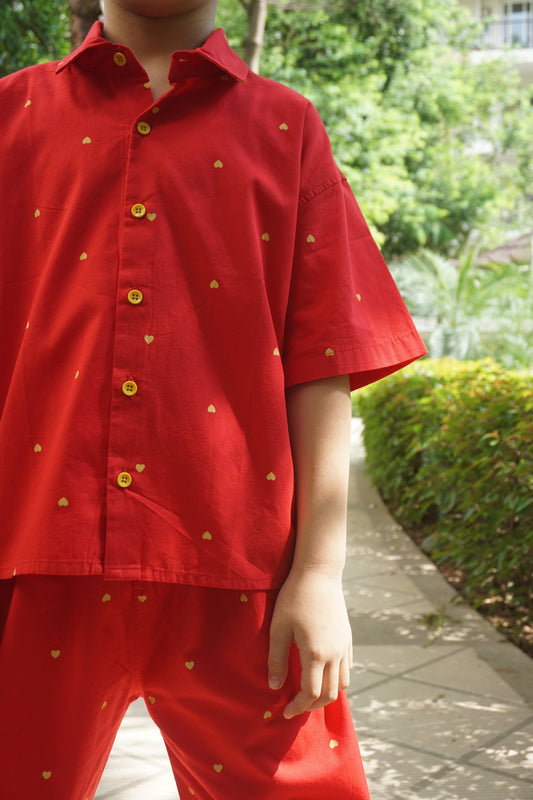
We are Gozi Lifestyle Pvt. Ltd, and we make pure cotton clothes for children aged 1 to 8 in our own unit in Tiruppur, Tamil Nadu. Because we make and sell directly, there is no distributor or mall margin in our price. We would rather show you what goes into each piece than ask you to trust a price tag, so here are a few examples from our current range, with the details exactly as stated on each product page:
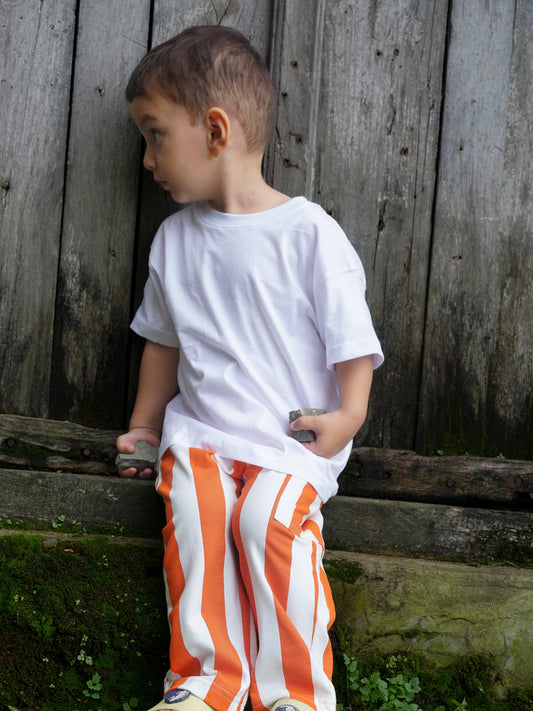
- Essential Classic white cotton T-shirt (₹399): 100% combed, biowashed Red Label cotton with a relaxed fit that runs slightly bigger than regular sizing.
- Grey kids joggers (₹499): 100% cotton French terry at 240 GSM, with a soft covered elastic waist and drawcord, sizes 1-2Y to 7-8Y.
- Sunny Side Up co-ord set (₹799): 100% Indian cotton T-shirt and shorts, OEKO-TEX Standard 100 certified with azo-free dyes, sizes 1-2 Y to 7-8 Y.
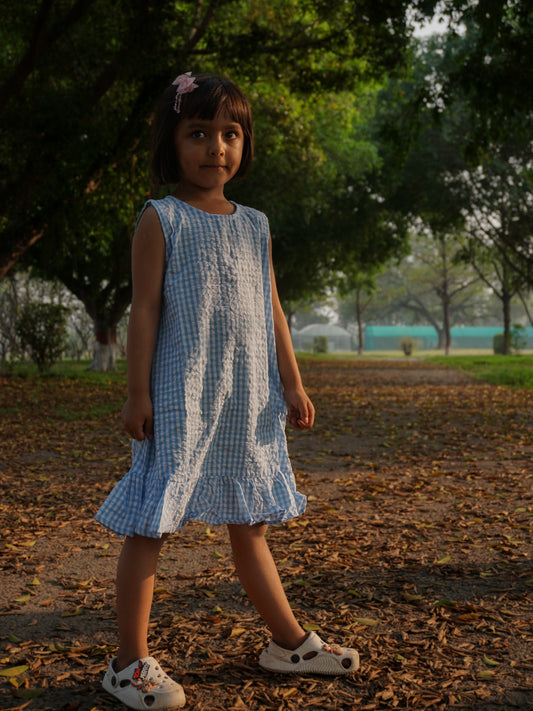
- Picnic Checks yellow co-ord set (₹1,299): cotton seersucker with woven (not printed) checks and a relaxed Chinese collar shirt, OEKO-TEX Standard 100 certified.
Prices are as listed on gozi.in at the time of writing and include GST. Use the same 2-minute check on our clothes as on anyone else's.

Frequently asked questions
Are expensive baby clothes worth it?
Only when the extra money goes into the fabric and the making: 100% cotton, good yarn, a sensible fabric weight, tested dyes and neat seams. If the extra cost is for a logo or decoration, it usually is not worth it for children who outgrow clothes within a year.
Why are baby and kids' clothes so expensive?
Small garments still need the same cutting, stitching, checking and packing steps as adult clothes, and many brands add distributor, retail and advertising margins on top. Buying from a manufacturer that sells directly removes some of those layers.
Are budget-friendly clothes safe for sensitive skin?
They can be. Check for 100% cotton, smooth seams, no rough prints on the inside and, ideally, a STANDARD 100 by OEKO-TEX label with a test number. Wash new clothes before the first wear. If your child's skin reacts to clothing, talk to your child's doctor. Our guide to fabrics for sensitive and eczema-prone skin has more.
Do premium outfits wash better than cheaper ones?
Well-made cotton with fixed dyes and a stable knit holds its size, shape and colour better, whatever the price. The label and the light test tell you more than the price does.
Is 100% cotton better for kids?
For everyday wear in India, yes for most children. Cotton breathes, absorbs sweat and is gentle on skin. The quality of the cotton still matters, which is why yarn, weight and finishing are on the checklist above.
The bottom line
Do not pay for the price tag; pay for the fabric and the making. Use the 2-minute check, think in cost per wear, and spend more on the pieces your child lives in every day. If you would like to see how our clothes measure up, start with our cotton co-ord sets or cotton T-shirts for kids.
Tags:
Previous
We make the cutest & most comfortable Birthday clothing For Kids !
Next
Toddler Pajamas for Playschool, Play and Bedtime: A Kidswear Maker's Guide