
Why do toddlers sweat while sleeping
Why Do Toddlers Get So Sweaty While Sleeping?
I have two sons: 6 and 4 years old. My elder son sweats a lot and many times I have found him sweating at night, especially during the summer season. My other kid does not sweat so much, but the elder one always sweats.
I have often noticed that when kids wear clothes made up of polyester or other non-breathable fabrics, this problem always occurs. I am not sure if this is an issue with only my son or other kids as well.
I have now stopped using polyester clothes for my kids, especially as sleepwear, because of this and some other issues.
And this is actually a common issue. Many of my friends say their kids have also experienced this.
So why do some toddlers and young children sweat so much while sleeping? And when should parents actually be concerned?
Is it normal for kids to sweat while sleeping?
The first thing I learned is that sweating at night is not necessarily something to worry about.
Children can sweat quite a lot while sleeping, and sometimes there may not be any particular problem behind it. In fact, night sweating is fairly common in young children. One study mentioned by Healthline found that almost 12% of children between 7 and 11 years experienced weekly night sweats.
Sometimes you may notice that only the child's head, scalp or neck is sweaty. Other times, the entire night suit may become damp and you may even have to change the clothes or bedsheet.
I have experienced the first situation many times with my elder son. I would check on him at night and find that his hair and neck were completely sweaty, while his younger brother sleeping next to him was perfectly fine.
And this is one of those things that makes parenting interesting. You have two children sleeping in the same room, under almost the same conditions, and one is sweating like he has just finished playing outside while the other one is completely dry.
Why do some kids sweat more than others?
Just like adults, every child is different.
Some children naturally sweat more than others. Healthline points out that young children can have more sweat glands relative to their smaller body size, and their bodies are still developing the ability to regulate temperature as efficiently as adults.
There can also be a family tendency. If parents themselves tend to sweat more, children may sometimes have a similar tendency.
So if your child sweats at night but is otherwise healthy, active and behaving normally during the day, sweating by itself does not necessarily mean something is wrong.
The room temperature and what the child is wearing also make a big difference.
A warm room, too many blankets or heavy sleepwear can make a child sweat more. Children also don't always remove a blanket or change their clothes when they become too warm.
This is especially relevant in India, where summer nights can remain quite warm and humid.
What about polyester and other synthetic fabrics?
This is where I personally started paying more attention.
I noticed that my son seemed to sweat much more when he wore polyester or other fabrics that did not feel very breathable. I can't say that polyester is the reason why he sweats because every child is different, but as a parent, I could clearly see that he was more comfortable in soft cotton clothes.
And once you start noticing these things, you start looking at children's clothes very differently.
For adults, we may wear a particular T-shirt for a few hours and not think much about the fabric. But children can spend 8–10 hours sleeping in the same clothes.
If the room is warm and the clothing doesn't feel comfortable, the child can end up feeling hot and sticky through the night.
This is also why breathable, lightweight sleepwear can be a simple thing to try when your child tends to get sweaty at night. Healthline specifically recommends lighter, more breathable pajamas and lighter bedding for children who sweat while sleeping.
For me, this was enough reason to stop using polyester sleepwear for my own kids.
Does sweating mean your child is too hot?
Not necessarily.
A child can sweat at night even when the room does not feel particularly hot. Sometimes it is simply the way that child's body regulates temperature.
But it is still worth checking a few simple things.
Is the room very warm?
Is your child wearing multiple layers?
Is the blanket too thick?
Is the night suit heavy?
Does the fabric feel breathable?
Does your child wake up uncomfortable or keep asking for water?
You don't need to make bedtime complicated. Sometimes simply reducing one layer of clothing or choosing lighter sleepwear can make a noticeable difference.
And sometimes the child will still sweat.
That can also be completely normal.
Why does my child sweat more in summer?
This one is probably obvious, but summer makes everything worse.
In India, summer nights can be hot and humid. Even if you have a fan or air conditioner running, the combination of body heat, bedding and clothing can make children uncomfortable.
Children are also not exactly known for staying still in bed.
They kick the blanket off.
Then they ask for it back.
Then they kick it off again.
Then somehow they end up sleeping sideways across the entire bed.
So instead of trying to control every part of their sleeping environment, I think it makes sense to start with the things we can control — comfortable bedding, a suitable room temperature and comfortable sleepwear.
What should toddlers wear to sleep?

For me, this is where cotton makes a lot of sense.
I prefer soft, breathable cotton clothes for my children at night because they feel comfortable against the skin and don't give them that sticky feeling that I have noticed with some synthetic fabrics.
Of course, there is no single fabric that will work exactly the same way for every child. Some children sleep hot, some sleep cold, and some seem to sweat no matter what they wear.
But if your child is a sweaty sleeper, lightweight and breathable sleepwear is definitely worth trying.
And this is actually one of the reasons we started making our own PJ sets at Gozi.
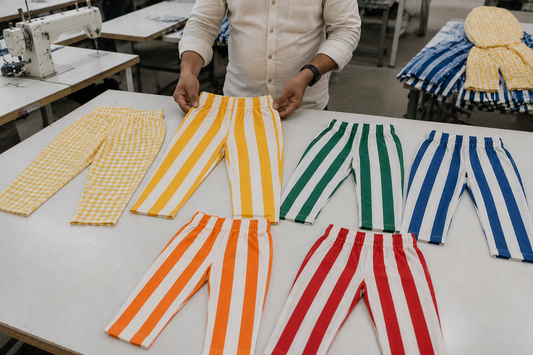
Our PJ sets are made from 100% cotton interlock fabric. Interlock is a type of double-knit fabric that has a smooth and soft feel, which makes it very comfortable for children's sleepwear.
My elder son wears these quite often. In fact, he likes them so much that he sometimes doesn't want to change out of them even when he is going to play.
For me, that's probably the best test.
If your own child keeps asking to wear something because it feels comfortable, you know you have got something right.
When should parents be concerned about night sweating?
This is also something I don't want to ignore.
While sweating at night is often normal in children, it can sometimes happen along with an illness or another health condition. Healthline recommends speaking with a pediatrician when night sweating is accompanied by symptoms such as persistent fever, weight loss, poor appetite, breathing difficulties, wheezing, snoring or other signs of illness.
So there is a difference between:
“My child has always been a sweaty sleeper.”
and
“My child suddenly started sweating heavily at night and also doesn't seem well.”
The second situation deserves more attention.
If you are worried about your child's sweating, especially if it is persistent or comes with other symptoms, it is always better to speak to your pediatrician rather than trying to figure out the cause yourself.
What I have learned from my own kids
Having two children has actually taught me that there is no single answer when it comes to kids.
My two boys are only two years apart. They sleep in the same house, experience the same weather and have broadly similar routines.
But one sweats a lot and the other doesn't.
So if your child sweats at night, don't immediately assume something is wrong.
First look at the simple things — the room, blankets, layers and sleepwear.
In my case, changing the type of clothes my children wear at night was one of the easiest things I could do. I stopped using polyester sleepwear for them and moved towards soft cotton instead.
It may not stop a child from sweating completely — and it shouldn't be expected to. Sweating is a normal way for the body to regulate temperature.
But comfortable sleepwear can make those sweaty summer nights a little easier.
And if your child is anything like my elder son, you may even find that their favourite PJ set becomes the one thing they refuse to take off in the morning.
Tags:
Previous
Cotton Pants for Kids in India: A Manufacturer's Guide to Fabric, Fit and Sizing (1–8Y)
Next
Why Do Kids Kick Their Blankets Off While Sleeping?