
Why Cotton Clothes Are the Best Choice for Kids Aged 1–8 in India
If you're a parent in India, you already know what a brutal summer feels like — 40°C afternoons, humid evenings, and a child who wants to run, jump, and roll in the mud regardless of the weather. Dressing your child for the Indian summer is not just about looking cute. It's about keeping them comfortable, safe, and rash-free through one of the harshest climates in the world.
At Gozi, we are kids' clothing manufacturers based out of Tiruppur — India's textile capital — and we specialise in pure cotton kids' wear designed specifically for the Indian climate. Over the years, we've experimented with a wide range of fabrics: cotton-polyester blends, rayon mixes, modal, microfibre, and more. After all that experimentation, we've arrived at the same conclusion every single time: pure cotton is the best fabric for kids' clothing in India. Not a blend. Not a synthetic lookalike. Pure cotton.
Here's everything you need to know about why cotton wins — and how to make sure what you're buying is actually the real thing.
Why Indian Mothers Have Always Trusted Cotton
Long before "breathable fabric" became a marketing term, Indian mothers were dressing their babies in soft, hand-washed cotton. There's a reason that cotton malmal, cotton jaipuri prints, and cotton kurtas have been wardrobe staples across generations — cotton works for our bodies and our weather.
India has one of the longest cotton farming traditions in the world. Cotton is native to this subcontinent. It has been grown here, woven here, and worn here for thousands of years. When you dress your child in cotton, you're not just making a fashion choice — you're making a choice rooted in generations of practical wisdom.
Modern science backs this up too. Cotton is highly breathable, absorbs moisture from the skin, and allows heat to escape. For a child whose body temperature regulation is still developing, this is not a small thing. It can be the difference between a comfortable afternoon and a cranky, overheated toddler.
The Problem with Imported Kids' Clothing from China
Walk into any wholesale kids' clothing market in India — or scroll through some online stores — and you'll find adorable, colourful kids' outfits at surprisingly low prices. A lot of this clothing is imported, primarily from China. It looks great in photos. It photographs well. The prints are bold and the cuts are trendy.
But here's what many parents don't realise: a significant portion of cheap imported kids' clothing is made from high-polyester or synthetic-blend fabrics. Some items are labelled "cotton" when they contain as little as 20–30% actual cotton. The rest is polyester, acrylic, or other synthetic fibres.
Why does this matter for your child?
Polyester doesn't breathe. It traps heat and moisture against the skin. For a child running around in 38°C heat, this is a recipe for heat rash, skin irritation, and discomfort.
Synthetic fabrics can harbour chemicals. Fast-fashion manufacturing often involves azo dyes, formaldehyde-based finishes, and other chemical treatments to give garments their bright look and wrinkle-free texture. Children's skin is thinner and more permeable than adult skin, making them more vulnerable to chemical absorption.
The "cute" factor is a distraction. A top that has cartoon characters on it and ships from overseas for ₹150 is cheap for a reason. You may not see the difference in the first wash. You might start to notice after the third.
We're not saying all imported clothing is bad. But as parents, it's worth knowing what questions to ask — and what the label should actually say.
What Type of Cotton is Best for Kids' Clothing?
This is where it gets interesting — and where our expertise as manufacturers comes in.
100% Cotton vs. Cotton Blends
The first thing to look for is 100% cotton. Cotton-polyester blends (like 60:40 or 70:30) are popular with manufacturers because they reduce costs, resist wrinkles, and make the fabric easier to print on. But that polyester content reduces breathability significantly. For Indian summers, a 100% cotton garment will always outperform a blend.
At Gozi, all our summer clothing uses 100% cotton. No blends, no shortcuts.
Knitted Cotton vs. Woven Cotton
This is a distinction most parents aren't aware of, but it makes a big difference in how a garment feels and functions.
Knitted cotton is what your child's T-shirts and pyjama sets are made from. The fabric is made by interlocking loops of yarn, which gives it natural stretch, softness, and flexibility. Knitted cotton moves with the body, making it ideal for active kids. Our T-Shirts and PJ Sets use soft knitted cotton that stretches gently without losing shape.
Woven cotton is made by weaving threads over and under each other on a loom. It has less stretch but a crisper structure, making it perfect for garments that need to hold their shape. Our Kurta Pajama sets and many of our Cotton Pants use woven cotton fabrics. Woven cotton also includes popular textures like seersucker, gingham checks, and poplin — all excellent for Indian summer dressing.
Think of it this way: knits are for play and sleep, wovens are for outings and occasions.
GSM and Yarn Count: The Hidden Quality Markers
Most parents shop by colour and cut. Manufacturers think in GSM (grams per square metre) and yarn count — and these numbers actually tell you a lot about quality.
GSM refers to the weight of the fabric. A higher GSM means a heavier, more structured fabric. A lower GSM means it's light and airy. For Indian summers, you want summer clothing in the 120–160 GSM range — light enough to breathe but not so thin it falls apart.
Yarn count tells you how fine the yarn is. A higher count means finer, softer yarn. At Gozi, we work primarily with 40s count cotton — a fine, soft yarn that gives our garments their characteristic smooth feel without being flimsy. This is the same count used by quality kidswear brands, and it's noticeably softer against a child's skin compared to coarser 20s or 30s cotton.
When a brand doesn't mention GSM or yarn count, that's often a sign that the fabric specs aren't something they're proud of.
Organic Cotton vs. Regular Cotton
Organic cotton is grown without synthetic pesticides or fertilisers, and processed without harmful chemicals. For children with sensitive skin or eczema, it can make a meaningful difference.
That said, not every family needs to go fully organic — regular cotton, when processed responsibly with skin-safe dyes, is perfectly suitable for most children. What matters most is that the dyes and finishes used are non-toxic and tested for skin safety.
If you're looking for a starting point, our Co-ord Sets and Girls' Dresses use soft reactive dyes that are gentle on skin and tested for harmful substances.
The Versatility of Cotton: What We Make at Gozi
One of the things we love most about cotton is how many different things you can do with it. Here's a look at how we use different cotton constructions across our range:
Co-ord Sets (1–8 Years)
Our bestselling summer co-ord sets are made from soft woven cotton in playful prints — ginghams, checks, floral blocks. Designed to be mix-and-match friendly, they're lightweight, breathable, and easy to wash. Perfect for the park, a playdate, or just lounging at home.
Kurta Pajama Sets
Made from fine woven cotton, our kurta pajama sets are designed for festivals, functions, and family occasions. Cotton kurtas are a natural fit for India's cultural calendar — they look sharp but keep children comfortable through long ceremonies and summer evenings.
Cotton Pants
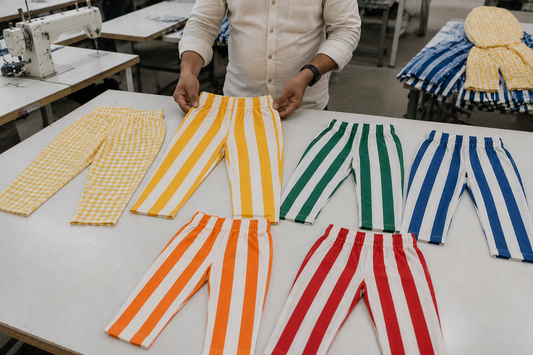
Our relaxed-fit cotton pants are a wardrobe staple for kids aged 1–8. We use everything from seersucker to gingham to French terry cotton here — each texture serving a slightly different purpose. Seersucker stays extra cool, gingham is crisp and smart, and French terry adds a soft, casual texture for cooler evenings.
Girls' Dresses
Pure cotton dresses that are light as air. Designed specifically for Indian summers — loose-fitting silhouettes in breathable woven cotton that let girls move freely without overheating.
T-Shirts
Our classic everyday T-shirts in soft knitted cotton. Minimal designs, fine yarn, and a fit that moves with your child. Available for both boys and girls.
PJ Sets
Sleep is when the body recovers, and what your child sleeps in matters. Our PJ sets are made from soft, pre-washed knitted cotton that gets softer with every wash — no scratchy seams, no rough finishes.
Cotton is Hypoallergenic: Why This Matters for Kids
India has one of the highest rates of childhood skin allergies in the world. Heat rash, contact dermatitis, and eczema flare-ups are common in children under 8 — and synthetic fabrics are frequently a trigger.
Cotton is naturally hypoallergenic. It doesn't contain the chemical additives that many synthetic fabrics rely on, and its smooth fibre structure reduces friction against sensitive skin. For children who are prone to rashes or have diagnosed skin conditions, switching to 100% cotton clothing — especially for everyday wear and sleepwear — is one of the most practical changes a parent can make.
Pure cotton also absorbs sweat efficiently. Instead of sitting damp against the skin (as polyester does), cotton wicks moisture and allows it to evaporate. In a country where your child's T-shirt is soaked by 10 AM in May, that matters enormously.
A Quick Word on Washing and Care
One concern parents sometimes raise about cotton is shrinkage. Here's what we've found: high-quality cotton clothing made from combed yarn (like our 40s count fabrics) shrinks significantly less than lower-quality cotton. Pre-washing garments before the first wear also reduces subsequent shrinkage. We always recommend a cold or lukewarm machine wash with a gentle detergent — no bleach, no harsh soaking.
Cotton also gets softer with every wash, which is why a well-made cotton garment feels better at six months than it did on day one.
FAQ: Cotton Kids' Clothing in India
Q: Is 100% cotton better than a cotton-polyester blend for kids? Yes, especially for Indian summers. 100% cotton is more breathable and better at wicking sweat. Blends may feel softer initially but trap heat and moisture over time.
Q: How do I know if a garment is actually 100% cotton? Always check the care label. Look for "100% cotton" — not just "cotton rich" or "cotton blend." Rub the fabric between your fingers; pure cotton has a natural matte texture and a slight warmth, unlike the cool, slippery feel of synthetics.
Q: Is imported kids' clothing from China safe? Not always. While some reputable international brands manufacture in China with strong quality controls, a lot of low-priced imported clothing uses high-polyester fabrics and chemical dyes not suitable for children's skin. Buy from brands that are transparent about their fabric composition.
Q: What's the difference between knitted and woven cotton for kids? Knitted cotton (used in T-shirts, PJs) has stretch and softness — great for play and sleep. Woven cotton (used in kurtas, pants, dresses) has structure and crispness — better for outings and occasions.
Q: What does GSM mean in kids' clothing? GSM stands for Grams per Square Metre and indicates fabric weight. For Indian summers, 120–160 GSM is ideal — light enough to stay cool but durable enough to last.
Q: Is organic cotton necessary for kids? It's beneficial for children with very sensitive skin or allergies. For most kids, responsibly processed regular cotton with non-toxic dyes works perfectly well. Look for brands that mention their dye safety standards.
Q: How should I care for cotton kids' clothes? Cold or lukewarm machine wash with gentle detergent. Avoid bleach. Dry in shade to preserve colour. Good quality cotton actually softens with each wash — a sign you've bought something worth keeping.
At Gozi, we believe that the best thing you can put on your child is something simple, safe, and made for this country's climate. Explore our full range of pure cotton kids' wear at www.gozi.in.
Tags:
Previous
Best Fabrics for Sensitive Skin & Eczema-Prone Kids: A Guide for Indian Parents
Next
Jeans vs. Cotton Pants for Kids: An Honest Parent-to-Parent Conversation