
Good Habits for Kids: A List by Age (2 to 8 Years) with a Printable Chart
Good habits for kids are small, repeated actions that keep them healthy, safe, kind and independent: washing hands before eating, brushing teeth twice a day, sleeping and waking at regular times, eating with the family without screens, tidying up after play, greeting elders and saying please and thank you. The best age to start is as early as your child can copy you, usually around 2 years, adding one habit at a time. Below you will find a list of good habits by age (2 to 8 years), a printable-style chart, a sample daily routine, and a simple method for making habits stick, all checked against guidance from the Indian Academy of Pediatrics (IAP), WHO and the American Academy of Pediatrics (AAP).
We are Gozi, a kids clothing maker in Tiruppur, and this guide is written for the parents we make clothes for: practical, Indian in context, and honest about what the evidence says.
What are good habits for kids, and why do they matter so much early on?
A habit is something a child does almost automatically because it has been repeated in the same situation many times. "We wash hands, then we eat" becomes a habit when your child heads to the sink without being told.
Young children thrive on that kind of predictability. The AAP's parenting site notes that children do best when routines are regular, predictable and consistent, and that routines help keep family life from becoming chaotic. Habits are simply the building blocks of those routines.
How long does it take? A well-known study from University College London found that it took participants an average of about 66 days for a new daily behaviour to feel automatic, with wide variation between people. Two findings matter for parents: missing a single day did not undo progress, but being very inconsistent meant the habit never formed. The study was done with adults, so treat the number as a rough guide. Aim for "most days, in the same order", not perfection.
Good habits for kids list by age: the chart
Children grow into habits gradually. A 2 year old can drop a toy in a basket; a 7 year old can pack a school bag. Use this chart as a starting point and adjust it to your child. Every child develops at their own pace, so if your 4 year old is not ready for something in the 4 to 5 column, simply wait a few months.
| Age | Hygiene and health | Home and independence | Manners and kindness | Learning and play |
|---|---|---|---|---|
| 2 to 3 years | Washes hands with help before meals; lets you brush their teeth twice a day; follows a fixed bedtime routine | Puts toys in a basket; puts dirty clothes in the laundry bucket; tries to pull pants up and down | Waves namaste or hello; says "thank you" with prompting; waits a few seconds for a turn | Looks at picture books with you daily; plays outdoors every day |
| 3 to 4 years | Washes hands with soap after the toilet and after outdoor play; covers mouth when coughing | Eats from own plate with a spoon or hand; carries own plate to the kitchen; chooses between two outfits | Says please and thank you; greets grandparents and guests; shares with a sibling for a short time | Helps choose the bedtime story; draws or colours instead of reaching for a phone |
| 4 to 5 years | Brushes with you supervising; drinks water through the day; sits for family meals without screens | Dresses mostly on their own; puts shoes on the rack; helps set the table | Waits instead of interrupting; says sorry and helps fix a mistake; is gentle with pets and younger children | Finishes one activity before starting the next; tidies up after play |
| 5 to 6 years | Bathes with help; cuts down on sweets and packaged snacks; follows screen limits with reminders | Makes own bed simply; fills water bottle; keeps school things in one place | Uses "excuse me"; thanks the bus driver or watchman; takes turns in games and accepts losing | Reads or is read to every day; does a small daily "homework" or practice time |
| 6 to 8 years | Brushes for two minutes (still checked by you); washes hands without reminders; gets about the same bedtime every school night | Packs school bag the night before; folds and puts away own clothes; does one fixed daily chore | Writes or says thank you for gifts; listens when others talk; stands up for a friend being teased | Keeps a reading habit; plays outdoors or plays a sport at least an hour a day |
Tip: screenshot or print this table and stick it on the fridge. Tick off one habit per week rather than all at once.

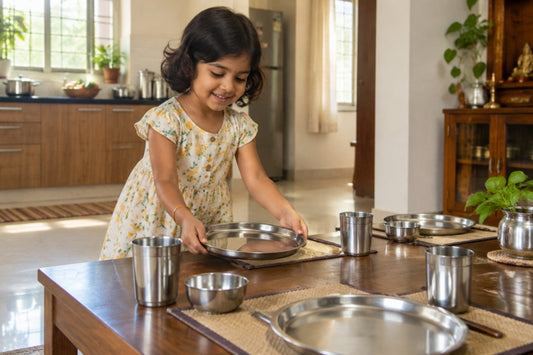
Hand washing before every meal is one of the easiest habits to anchor, because meals happen at the same times every day.
What are the most important healthy habits for kids?
If you only focus on a handful of habits, make them these. Each one is backed by guidance from a paediatric or public health body.
1. Washing hands the right way
The AAP, citing the CDC, recommends that children wet their hands, use soap and rub and scrub every surface for 20 seconds before rinsing and drying. Key times: before eating (including snacks), after using the toilet, after playing outdoors, after touching a pet, and after coughing or sneezing into their hands. Twenty seconds is longer than it feels, so hum a short song or count slowly together. Plain soap and water is enough.
In many Indian homes children eat with their hands, which makes this habit even more valuable. Keep a small step stool and a soap within reach at the sink so your child can do it alone.
2. Brushing teeth twice a day
The AAP advises brushing twice a day, after breakfast and before bed, using a smear of fluoride toothpaste about the size of a grain of rice for children under 3 and a pea-sized amount from 3 to 6. Most children need help until about age 8 (a handy sign is when they can tie their own shoelaces), and an adult should still check that they brush for two minutes. Brushing side by side turns it into a shared ritual instead of a battle.
3. A regular sleep and wake time
Sleep is a habit too. WHO recommends regular sleep and wake-up times for young children, and the hours below come from WHO and the American Academy of Sleep Medicine recommendations endorsed by the AAP.
| Age | Sleep per 24 hours (including naps) |
|---|---|
| 1 to 2 years | 11 to 14 hours |
| 3 to 5 years | 10 to 13 hours |
| 6 to 12 years | 9 to 12 hours |
A simple bedtime routine the AAP suggests is "brush, book, bed", with lights dimmed and screens switched off at least an hour before sleep. Comfortable, breathable sleepwear helps too, especially in Indian summers; we make pure cotton night suits and PJ sets for kids for exactly this. If bedtime is your favourite time to talk, you may enjoy our piece on bedtime conversations with kids.
4. Moving every day
WHO guidance says children aged 1 to 4 should spend at least 180 minutes a day in a variety of physical activities, spread through the day, and 3 and 4 year olds should include at least 60 minutes of energetic play. For children aged 5 to 17, WHO recommends at least 60 minutes of moderate to vigorous activity daily. In practice that means park time, cycling in the colony, dancing at home, or a game of catch on the terrace.
5. Healthy screen habits
The IAP's guidelines on screen time are clear and India specific. They say children under 2 should not be exposed to any type of screen, children aged 2 to 5 should have a maximum of 1 hour a day (in sessions of no more than 20 to 30 minutes), and children aged 5 to 10 should have less than 2 hours a day. The same guidelines say screens should not be used during meals or within an hour before sleep, should not be used to feed or calm a crying child, and that parents should act as role models. That last point is the hardest and the most important.
6. Eating together, without screens
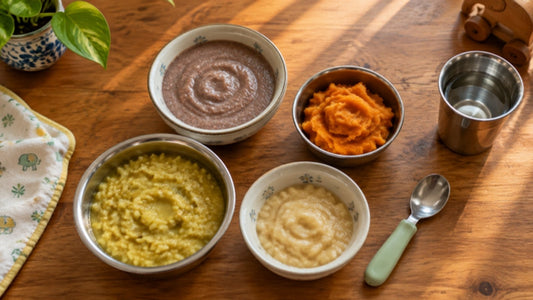
Family meals are where many habits meet: washing hands, sitting at the table, trying new foods, waiting for others, and talking about the day. The AAP recommends eating together without screens or TV and keeping mealtime conversation positive. For babies and toddlers just starting family food, our month-by-month first foods guide for Indian babies covers the early steps.
Good habits at home: helping and responsibility
Children who help at home learn that they are a useful part of the family, not just people who are looked after. Good home habits include putting toys away, carrying their plate to the kitchen, putting shoes on the rack, folding small clothes and watering plants. For a detailed list of tasks your child can do at each age, see our household chores for kids by age chart, and for the bigger picture, our guide on how children can help their parents at home.
Dressing themselves is one of the most confidence-building habits of all. It is far easier when clothes are easy to manage: soft elastic waists, no fiddly buttons and fabric that does not stick to sweaty skin. Our pull-on cotton pants for kids are made with that in mind, and our step-by-step guide on teaching your child to dress independently walks you through it.
Good manners and social habits for kids
Manners are habits of kindness. In Indian families they often come with extra layers: touching elders' feet or saying namaste, offering water to guests, not starting to eat before elders, and using respectful words like "aap", "ji" or "anna" and "akka". A short starter list:
- Greet people when they arrive and say bye when they leave.
- Say please, thank you, sorry and excuse me.
- Wait for a turn to speak instead of interrupting.
- Share and take turns, and accept losing a game.
- Knock before entering a closed room.
- Be gentle with younger children, animals and other people's things.
Children learn manners mostly by watching. The Australian government funded Raising Children Network puts it well: what you do is often much more important than what you ask them to do.
Good habits for kids in school (class 1 and class 2)
Once school starts, a few habits make every morning calmer and every day more successful:
- Packing the school bag and laying out the uniform the night before.
- Carrying and finishing a water bottle.
- Washing hands before the tiffin and after the toilet. (Young children catch more colds when they start school; our post on why kids get sick when they start preschool explains why.)
- Listening when the teacher speaks, raising a hand to talk.
- Telling a parent or teacher when something feels wrong.
- A short daily reading or practice time at home, at the same time each day.
Some schools and families also like a short daily "thought of the day"; here is our list of thoughts of the day for kids.

"Brush, book, bed": a calm, screen-free end to the day is a habit that helps the whole family.
What does a good daily routine for kids look like, from morning to night?
Here is an example school-day routine for a 5 to 6 year old, built from the guidance above. Times are only a guide; shift the whole schedule to match your school timings and your child's sleep needs. On weekends, try to keep wake-up and bedtime within about an hour of the weekday times.
| Time (example) | Routine step | Habit it builds |
|---|---|---|
| 6:30 am | Wake up, toilet, wash face, brush teeth | Hygiene, regular wake time |
| 6:45 am | Get dressed (clothes laid out the night before) | Independence |
| 7:00 am | Breakfast at the table, no screens | Healthy eating, family time |
| 7:30 am | Wear shoes, pick up bag and water bottle | Responsibility |
| Afternoon | Back home: wash hands, change clothes, snack, rest | Hygiene, self-care |
| 4:30 pm | Outdoor play for at least an hour | Physical activity |
| 6:00 pm | Short reading or practice time; one small chore | Learning, helping at home |
| 7:30 pm | Family dinner, no screens; screens off for the day | Family connection, healthy screen use |
| 8:15 pm | Bath or wash, pack bag, lay out clothes | Planning ahead |
| 8:30 pm | Brush, book, bed; lights out by about 9 pm | Sleep routine |
How do you teach good habits to kids so they actually stick?
- Start with one habit. Choose the habit that would make the biggest difference this month (often hand washing or bedtime). Add the next one only when the first feels automatic.
- Attach it to something that already happens. "After we come home, we wash hands." "After dinner, we pack the bag." A fixed trigger is what turns an action into a habit.
- Do it together first. Brush your teeth beside them, wash hands at the same time, read your own book at reading time. Children copy what they see.
- Make it easy. A low hook for the school bag, a step stool at the sink, a basket for toys, clothes they can put on alone. Remove the small obstacles that lead to "I can't".
- Use a picture chart. Young children cannot read a list, but they can follow pictures. Draw or print simple icons (toothbrush, plate, book, bed) and let your child tick or add a sticker.
- Praise the specific action. Instead of "good boy", try "You washed your hands without me asking. That keeps germs away." Raising Children Network explains that descriptive praise makes positive behaviour more likely.
- Be consistent, not perfect. Travel, festivals and illness will break the routine. Missing a day is fine; just pick it up again the next day, in the same order.
- Get the whole family on board. In joint families, explain the habit to grandparents and helpers too, so your child hears the same message from everyone.
For a wider look at keeping family life warm while you do all this, read our piece on happy parenting.
Good habits and bad habits: what to swap
Rather than punishing a habit you do not like, give your child something to do instead. Some common swaps:
| Habit to change | Habit to build instead | What helps |
|---|---|---|
| Watching cartoons while eating | Talking at the table during meals | Phones away for everyone, including adults |
| Leaving toys all over the floor | Tidy-up time before the next activity | A basket or shelf they can reach, a 5-minute warning |
| Interrupting adults | Waiting, or a gentle hand on the arm to signal | Practise it as a game; thank them for waiting |
| Screens right before bed | Brush, book, bed | Screens off an hour before sleep, a fixed bedtime |
| Grabbing toys from a sibling | Asking and taking turns | A timer for turns; praise when they ask |
| Running out without shoes or water | Shoes and bottle at the door | A shoe rack and bottle spot by the door |
When should you talk to your child's doctor?
Most habit struggles are a normal part of growing up. Check with your child's doctor if:
- Your child snores loudly with pauses in breathing, gasps or chokes during sleep, or is often very tired, irritable or struggling to concentrate during the day. The NHS lists these among the signs of obstructive sleep apnoea in children, which a doctor should assess.
- Your child is not getting close to the recommended hours of sleep for their age over several weeks, despite a steady routine.
- You are worried that your child is far behind other children of the same age in self-care skills such as feeding, dressing or using the toilet, or that they have lost skills they had before.
- Screen use is causing serious battles, poor sleep or reduced play, and the limits above are not working.
This article is for general information and is not a substitute for advice from your child's doctor.
Frequently asked questions
What are 10 good habits for kids?
Washing hands before eating and after the toilet; brushing teeth twice a day; sleeping and waking at regular times; eating meals with the family without screens; drinking water through the day; playing outdoors every day; tidying up toys after play; saying please, thank you and sorry; greeting elders and guests; and reading or looking at books every day.
At what age should I start teaching good habits?
You can start as soon as your child can copy you, usually around 2 years, with very simple habits like putting a toy in a basket or washing hands with your help. Expect to help a lot at first; independence grows steadily through ages 3 to 8.
How long does it take a child to form a habit?
There is no fixed number. A UCL study in adults found an average of about 66 days for a daily behaviour to become automatic, with big differences between people. With young children, expect weeks to months of gentle repetition, and do not worry about an occasional missed day.
How do I make a good habits chart for my child?
Pick three to five habits from the age chart above, draw or print a simple picture for each, and list the days of the week across the top. Put it at your child's eye level and let them tick or add a sticker each time. Celebrate the effort, and swap in a new habit once one becomes automatic.
What are good habits for kids in school?
Packing the bag the night before, carrying a water bottle, washing hands before the tiffin and after the toilet, listening when the teacher speaks, raising a hand to talk, being kind to classmates and telling a trusted adult when something is wrong.
What is a good daily routine for kids?
A good routine has a regular wake time and bedtime, meals at roughly the same times, at least an hour of active play, some reading or quiet time, a small chore, and a calm, screen-free hour before sleep. See the sample morning to night routine table above and adjust the times to your family.
Habits are built in ordinary moments: at the sink, at the dinner table, at bedtime. Pick one this week, do it alongside your child, and let the rest follow. For more practical guides for parents of little ones, browse the rest of our Notebook.
Tags:
Previous
Household Chores for Kids by Age: A Printable Chart for Indian Families (2 to 10 Years)
Next
Party Wear Dress for Boys (3 to 8 Years): 8 Smart Cotton Outfits Kids Will Actually Wear