
Why Kids Get Sick When They Start Preschool (and What Actually Helps)
Quick answer: If your child seems to be sick every other week since starting preschool or daycare, you are not imagining it, and in most cases it is normal. Children in group care can have as many as 8 to 12 colds a year, according to Australia's National Health and Medical Research Council. The same guidance has good news: by about age 3, children who attend care have no more colds than children cared for only at home. Handwashing, steady sleep and meals, up-to-date vaccinations and knowing when to keep your child home make the biggest difference.
We learnt this the hard way. Before our son started preschool, he rarely fell ill. He was active and playful and his health seemed strong. Within a few weeks of starting, it felt like he was home with a new cough or cold every other week, and we kept wondering whether something was wrong. If that sounds familiar, you are not alone. This guide explains why it happens, what is normal, what helps, and when to call the doctor.
Cotton clothing notes for parents of 1 to 8 year olds
Occasional emails with new arrivals and size guides from our Tiruppur unit. Unsubscribe any time.
Is it normal for a child to be always sick after starting school?
For most children, yes. A toddler who has mostly been at home has only met the germs in the family. A preschool class brings many children together, each carrying the coughs and colds going around their own homes. Your child's immune system meets many of these viruses for the first time, and each one can mean a few days of runny nose, cough, mild fever or an upset tummy.
Signs that it is the usual "preschool year" pattern:
- Mostly colds, coughs and the occasional tummy bug that settle on their own
- Your child bounces back between illnesses: playing, eating and drinking reasonably well
- They are growing and meeting their milestones
- Illnesses bunch up in the first year of group care and ease as they get older
If the illnesses are severe, your child never seems to fully recover in between, or you notice any of the warning signs listed further down, speak to your paediatrician.

Why preschool brings so many coughs and colds
1. Lots of new germs, all at once
Preschool is wonderful precisely because children play together: they share toys, sit close, hold hands and eat side by side. That is also how germs travel. Colds spread through droplets in the air and through hands, tissues, toys and spoons that carry the virus to the eyes, nose or mouth. Even a very clean preschool cannot keep a room full of toddlers germ-free.
2. An immune system that is still learning
Every cold your child catches is a new virus their body has to learn to fight. This is why young children get more infections than older children and adults, and why the number usually drops as they grow. It is tiring for everyone, but it is part of normal development, not a sign that your child is weak.
3. Hygiene habits are still a work in progress
Two to four year olds put fingers and toys in their mouths, rub their eyes, and forget to cover a sneeze or wash their hands after the toilet. These habits take time and lots of gentle repetition, at home and at school.
4. A new routine, earlier mornings and less sleep
Starting school often means waking earlier, a new tiffin routine, a long day of new faces and sometimes a nap that disappears. Many parents notice that a tired, overstimulated child seems to pick up everything. Sleep and regular meals are two things fully in your control, so protect them as much as you can.
5. Big feelings about a big change
Separation from you, new adults and a new place can make some children anxious for the first few weeks. Anxiety can show up as tummy aches, clinginess, poor sleep or a smaller appetite. Talk to your child about their day, keep goodbyes short and warm, and let the teacher know if your child is struggling.
6. Some seasons bring more bugs
Coughs and colds also come in waves. Many Indian parents notice more of them when the weather turns, during the monsoon and again as winter sets in. If your child starts preschool in one of these seasons, the first months can feel especially rough.
What actually helps: a practical checklist
- Make handwashing a habit, not a lecture. The US Centers for Disease Control and Prevention says washing hands helps prevent the spread of respiratory and diarrhoeal infections. Teach your child to scrub with soap for at least 20 seconds (about two rounds of "Happy Birthday") before eating, after the toilet and as soon as they come home. Our list of good habits for kids by age has ideas to make it stick.
- Teach the elbow sneeze. Practise coughing and sneezing into the elbow at home, as a game, until it becomes automatic.
- Protect sleep. Move bedtime earlier when school starts, keep it consistent on weekends, and keep the bedroom comfortable. A breathable cotton night suit helps children who wake up hot and sweaty; read why toddlers sweat while sleeping if that is your child.
- Keep meals and water steady. Pack familiar, simple food your child will actually eat, and a water bottle they can open on their own. For everyday food and lifestyle habits, see our guide on supporting your child's immunity naturally in India.
- Keep vaccinations up to date. Before school starts, check with your paediatrician that your child's vaccinations are on schedule, including any catch-up doses.
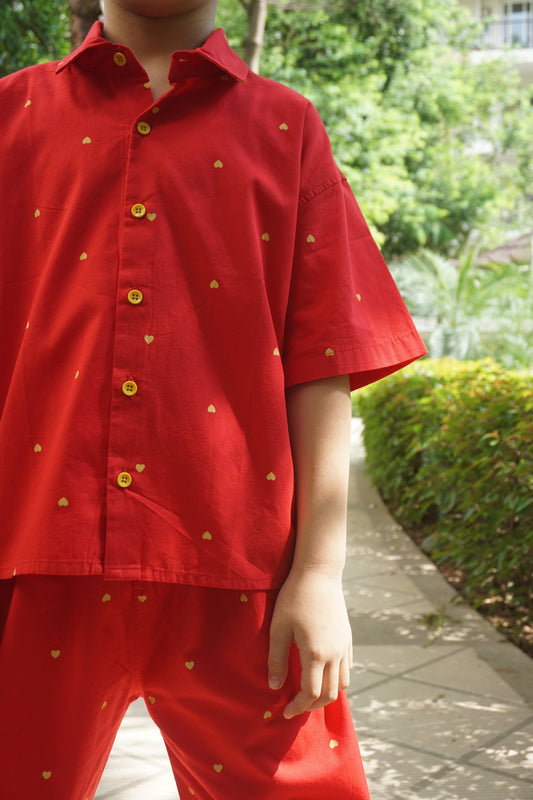
- Dress for the classroom, not for the photo. Clothes will not stop a virus, but comfortable clothing makes a long school day easier. Choose breathable cotton your child can pull on and off by themselves at the toilet, such as an elastic-waist T-shirt and shorts co-ord set or pieces from our cotton co-ord sets. Keep a labelled spare set in the school bag for accidents and spills. Our post on 100% cotton pants for playschool covers what works best.
- Don't send a sick child just to keep attendance. Resting at home helps your child recover faster and protects classmates and teachers.
- Look after yourself too. Broken nights and back-to-back sick days are exhausting. Share the load, accept help, and remember this phase does pass.
When to keep your child home from preschool

Always follow your preschool's own sick-child policy. As a simple rule of thumb, the UK's NHS guidance on whether a child is too ill for school suggests:
| Symptom | School or home? |
|---|---|
| High temperature | Keep them home until it goes away |
| Diarrhoea or vomiting | Keep them home until they have had none for at least 2 days (48 hours) |
| Mild cough or cold | Usually fine to go, if they are otherwise well and have no high temperature |
| Chickenpox | Keep them home until all the spots have crusted over |
| Feeling too unwell to join in | Keep them home and rest |
If you keep your child at home, let the teacher know on the first day so they can watch for the same symptoms in other children.
When to see a doctor
Most preschool colds get better on their own, but contact your paediatrician promptly, or go to the nearest hospital in an emergency, if your child:
- Is breathing fast, struggling to breathe, wheezing, or the skin between the ribs pulls in with each breath
- Is unusually drowsy, floppy, hard to wake or very irritable
- Has a fever that lasts more than a couple of days, keeps coming back, or comes with a rash
- Shows signs of dehydration: very little urine, a dry mouth, no tears, or refusing to drink
- Has ear pain or discharge from the ear, or a cough that goes on for weeks
- Gets ill so often that they never seem to recover in between, or is not growing or gaining weight as expected
- Simply seems "not right" to you. Trust your instinct
Frequently asked questions
Why is my child always sick since starting school?
Because they are meeting many new viruses for the first time in a busy room of children who share toys, space and air. Frequent mild colds in the first year of preschool or daycare are common and usually ease with time.
How many colds a year is normal for a preschooler?
Children in group care can have as many as 8 to 12 colds a year. What matters more than the number is how your child is between illnesses: if they bounce back, eat, play and grow well, it is usually the normal pattern.
Will my child keep getting sick like this forever?
No. Most children get fewer infections as their immune system matures and they get older. The first year of group care is usually the hardest.
Should I take my child out of preschool because they keep falling ill?
Frequent mild colds alone are rarely a reason to stop preschool, since your child would likely meet the same germs a little later in school. If illnesses are severe or you are worried, talk to your paediatrician before deciding.
Can clothing help my child stay healthy at preschool?
Clothing does not prevent infections. Breathable, easy-to-manage cotton clothes simply keep your child comfortable and independent through the day, and a spare set in the bag saves the day when accidents happen.
Final thoughts
It is hard to watch your little one go from cold to cold, especially when they were so healthy before. Remember that this is a phase most families go through. Keep the basics steady: handwashing, sleep, good food, vaccinations, and rest at home when they are unwell. Be patient and kind, with your child and with yourself. With time, your child will settle into their routine and the sick days will become fewer.
You may also like: should nursery kids be wearing school uniforms?
This article is for general information and is not a substitute for advice from your child's doctor.
Tags:
Previous
How to Dress Your Toddler for 40°C Summers: A Mom’s Guide
Next
Loose vs. Fitted Clothes: What’s Best for Kids in Summer?